
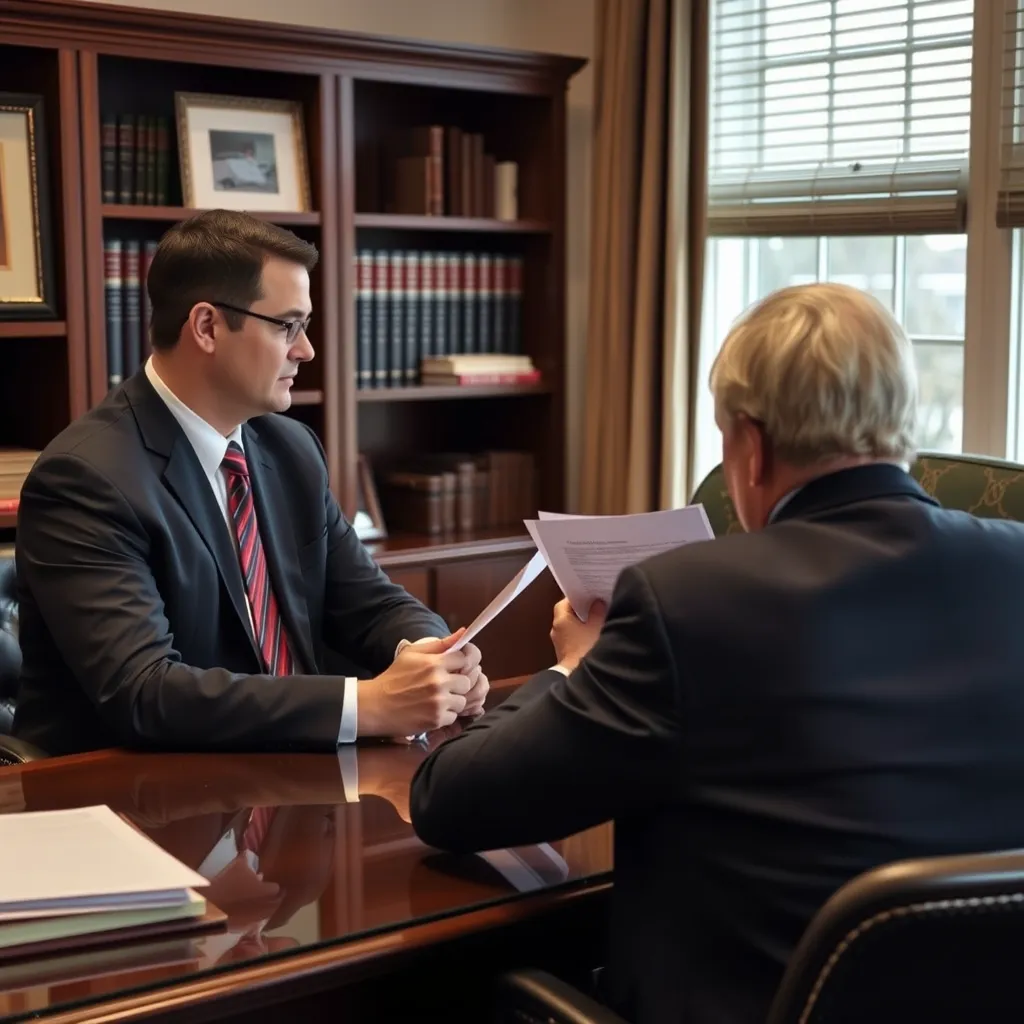
Visitation Enforcement Lawyer in Falls Church, VA
Parenting disputes are often emotionally charged, and when a court order regarding visitation is not followed, the resulting conflict can be overwhelming. If you are in Falls Church, VA, and need to enforce a visitation schedule—whether it’s due to missed exchanges, failure to adhere to parenting time guidelines, or other violations of a custody agreement—you need immediate legal guidance. Visitation enforcement law is highly specialized, requiring an attorney who understands the nuances of Virginia family court procedure. At Law Offices Of SRIS, P.C., we provide dedicated representation to help parents secure the visitation time they are legally entitled to. Our focus is on protecting your rights and ensuring that custody orders are followed by all parties involved.
The process of enforcing a parenting plan can be complex, involving motions, hearings, and adherence to strict court timelines. Because the outcome directly impacts your relationship with your child, it is crucial to work with experienced local counsel. If you are struggling with enforcement issues in Falls Church, VA, or surrounding areas like Arlington visitation enforcement lawyer services, our team can guide you through every step.
What Exactly Is Visitation Enforcement Law?
Visitation enforcement law refers to the legal actions taken when one parent fails to comply with a court-ordered parenting schedule or visitation agreement. It is not simply about asking for “more time”; it involves proving a breach of a specific, existing court order. These violations can range from chronic failure to exchange children on time to outright refusal to allow supervised or unsupervised visitation as mandated by the judge.
When enforcement is necessary, an attorney must file motions with the appropriate local court, presenting evidence—such as text messages, witness testimony, and communication logs—to demonstrate the pattern of non-compliance. The goal is typically for the court to issue an order compelling adherence to the existing schedule, or, in severe cases, modifying the visitation terms entirely. Understanding the difference between a custody dispute and an enforcement action is critical, and our experience with DC visitation enforcement lawyer matters helps us navigate these distinctions for our clients.
What Are the Steps to Enforce Visitation in Virginia?
The path to enforcing a visitation order in Virginia generally follows several structured steps. First, you must gather comprehensive documentation detailing every instance of non-compliance. This evidence is your foundation. Next, you will work with an attorney to determine the appropriate legal mechanism—this might be a Motion for Contempt, a Motion to Modify, or another specific filing depending on the nature of the violation. The court will then schedule a hearing where you present your case. Throughout this process, we advise our clients on how to best communicate with the opposing party while maintaining a clear record for the court.
It is important to remember that every case is unique, and what works in one jurisdiction may not work in another. For instance, if you are dealing with issues near the border, knowing the local rules for Annapolis visitation enforcement lawyer matters can make a significant difference. We manage these complexities so you do not have to.
How Does the Court Handle Non-Compliance with Parenting Plans?
When a court finds that one parent has violated a parenting plan, the consequences can vary widely based on the judge’s discretion and the severity of the violation. Penalties can range from the issuance of fines or payment of attorney’s fees to, in extreme cases, temporary modification of visitation rights or even supervised visitation. The court views non-compliance not just as a disagreement, but as a failure to uphold the judicial order itself.
Our approach is always strategic: we aim first to compel adherence to the existing order while simultaneously building a case for what the long-term best interest of the child requires. If you are facing allegations of non-compliance, or if you are the one needing to enforce a schedule, our dedicated team at Law Offices Of SRIS, P.C., can provide counsel tailored to the specific facts of your situation.
How Mr. Sris and the Firm’s Of Counsel Attorneys Handle Visitation Enforcement Cases in Falls Church
Enforcing visitation rights requires more than just legal knowledge; it demands tactical precision, emotional resilience, and an understanding of local court culture. When parents in Falls Church require assistance with enforcement, our process begins with a thorough intake review to build an indisputable timeline of violations. We analyze all communication—emails, texts, and records—to establish patterns of behavior that demonstrate the need for judicial intervention. Our goal is always to present a cohesive narrative to the court that supports your primary objective: consistent, predictable time with your child.
Our approach is collaborative. We work closely with you to understand your emotional needs while maintaining the necessary professional distance required in litigation. Furthermore, we leverage the collective experience of our firm’s Of Counsel attorneys. These specialized practitioners bring diverse perspectives from various legal fields, ensuring that whether the enforcement issue touches on custody modification, financial support, or interstate travel, the strategy remains robust and comprehensive. We are committed to advocating fiercely for your rights at every local court location.
About Mr. Sris and the Firm’s Of Counsel Attorneys
Mr. Sris, Owner and Founder, brings decades of dedicated experience to family law matters. As a former prosecutor, he possesses an invaluable understanding of how criminal and civil cases intersect within the judicial system, giving our clients a significant advantage when presenting evidence of non-compliance. Mr. Sris is admitted in Virginia, Maryland, the District of Columbia, New Jersey, and New York, allowing him to advise on jurisdictional issues that often complicate enforcement efforts across state lines.
The firm’s Of Counsel attorneys are a network of highly specialized legal minds who augment our core team’s capabilities. They represent independent attorneys who bring thorough knowledge in niche areas of family law, ensuring that the advice provided is always cutting-edge and multi-faceted. Whether the matter requires experience in international custody agreements or complex financial disclosures related to visitation, these seasoned professionals work alongside Mr. Sris to build the strong case for our clients.
Frequently Asked Questions About Visitation Enforcement
What is the difference between visitation enforcement and custody modification?
While related, they are distinct. Enforcement deals with ensuring compliance with an existing court order (i.e., someone isn’t showing up for exchange). Modification requires proving that the circumstances have changed significantly enough to warrant a change to the original parenting plan itself.
How long does it take to enforce visitation in Virginia?
The timeline varies greatly depending on the court’s docket, the complexity of the evidence, and whether the other party is cooperative. Generally, initial filings can move quickly, but securing a final, binding order often takes several months.
Can I enforce visitation if the other parent moves out of state?
Yes, but it becomes significantly more complex. This usually requires filing through interstate enforcement mechanisms, such as the Uniform Child Custody Jurisdiction and Enforcement Act (UCCJEA), which involves coordinating with courts in multiple states.
What evidence do I need to prove non-compliance?
Documentation is key. You should collect texts, emails, calendar entries, witness statements, and any communication that proves the specific dates and times the visitation was missed or violated. A detailed log is essential.
Is it better to negotiate or sue for enforcement?
Negotiation is always the preferred first step. However, if the other party refuses to engage constructively, filing a lawsuit (motion) becomes necessary to compel action and obtain a court order that holds them accountable.
Can I get temporary orders while enforcement is pending?
Yes. If you can show the judge that there is an immediate threat to your parenting time or the child’s stability, you can request an emergency or temporary order from the court before the main hearing.
What if the other parent refuses to sign any paperwork?
If they refuse to cooperate in signing documents, your attorney will petition the court to issue orders by default or through other means of judicial decree. The court’s primary concern is the child’s best interest, not the parents’ agreement.
Does my employment status affect enforcement?
Generally, no. Enforcement focuses on the parent’s adherence to the schedule, not their job. However, if the lack of income is related to the inability to provide for the child during visitation, it may become a factor in support discussions.
Need a Visitation Enforcement Lawyer in Falls Church, VA?
Navigating the legal system when your child’s time with you is at stake is emotionally and logistically draining. You need an advocate who is not only knowledgeable about Virginia family law but who also understands the local dynamics of the Falls Church courts. Do not attempt to handle this alone.
The Law Offices Of SRIS, P.C. provides comprehensive representation for all visitation enforcement needs in Falls Church and across Northern Virginia. We guide you through the evidence gathering, the motion filing, and the hearing presentation process, giving you the strongest possible chance of achieving a court order that protects your parental rights. Contact us today to schedule a private consultation and discuss how our experienced team can help restore stability and consistency to your family life.
Ready to Take Action on Your Visitation Rights?
If you are facing non-compliance with a parenting plan in Falls Church, VA, or need counsel regarding Arlington visitation enforcement lawyer issues, please reach out. Our team is ready to review your case details and advise on the immediate next steps.
Call us directly at (888) 437-7747 or visit our Falls Church location by appointment only. We are here to help you reach our location and begin the process of enforcement.
Case results depend on a variety of factors unique to each case.
Attorney advertising. Prior results do not guarantee a similar outcome.