
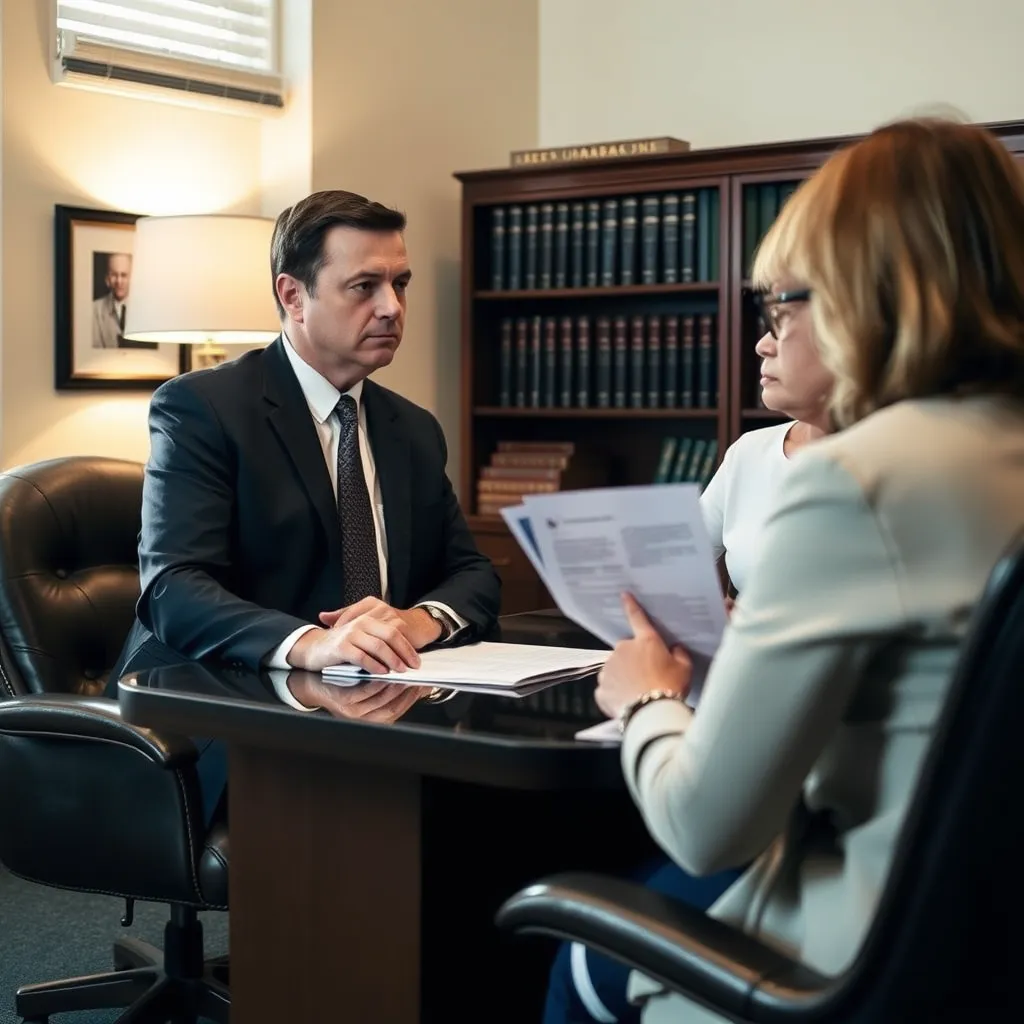
Rehabilitative Alimony Lawyer Poquoson, VA
When a marriage ends, spousal support can become one of the most contested issues. Rehabilitative alimony in Poquoson, Virginia, is designed to provide the financially disadvantaged spouse with the resources and time needed to obtain education, training, or work experience sufficient to become self-supporting. This form of support is not intended to penalize the paying spouse; rather, it focuses on a forward-looking goal of economic independence. Mr. Sris, Owner and Founder of Law Offices Of SRIS, P.C., concentrates his family law practice on the factual and financial analysis that Poquoson judges use when weighing rehabilitative alimony requests under Va. Code § 20‑107.1. He and his Of Counsel handle matters filed in the Poquoson Circuit Court, located at 500 City Hall Avenue, and understand the procedural expectations of the Eighth Judicial District. Whether you are the spouse seeking support or the spouse who may be ordered to pay it, having counsel who can present your circumstances to the court in a clear, well-supported manner can affect the outcome of the proceeding. Reach Mr. Sris and his Of Counsel at (888) 437-7747 to request a consultation. Law Offices Of SRIS, P.C. – Advocacy Without Borders.
What Rehabilitative Alimony Means in Poquoson, Virginia
In Poquoson, rehabilitative alimony is governed by the same Virginia statute that applies statewide, but the way it is argued and awarded can depend heavily on local judicial practice and the specific financial realities of the litigants. Under Va. Code § 20‑107.1, the court may order spousal support for a defined period if, after considering the statutory factors, it determines that the recipient spouse needs time to acquire the education or training necessary to enter the workforce. The goal is not permanent dependence, but a bridge to self-sufficiency. Poquoson is a relatively small independent city located on the Chesapeake Bay, and the cost of living, local employment opportunities, and the need for retraining in fields typical to the Hampton Roads region often factor into the court’s determination of how long rehabilitative support should last.
The Poquoson Circuit Court handles divorce, equitable distribution, and all spousal support determinations. While the judges apply the same thirteen statutory factors enumerated in § 20‑107.1, they also exercise significant discretion in weighing them. Factors such as the standard of living established during the marriage, the duration of the union, each spouse’s contributions—both monetary and non-monetary—and the current earning capacity of each party are carefully scrutinized. Because Poquoson’s court calendar is managed by the Eighth Judicial District, cases are scheduled among multiple jurisdictions, and procedural consistency helps keep the support motion on track. Mr. Sris and his Of Counsel have experience presenting rehabilitative alimony arguments in this local court, aligning the factual presentation with the statutory language the judge must apply.
It is important to understand that rehabilitative alimony is distinct from permanent or indefinite support. The court must find that the need for support will be temporary and that the recipient has a realistic plan for becoming self-supporting. That plan may be evidenced by a vocational assessment, enrollment in a degree or certification program, or a documented job search. The paying spouse can challenge the plan’s feasibility or propose alternative arrangements, such as lump-sum support or a shorter duration. In Poquoson, parties who craft a well-tailored settlement agreement may avoid litigation, but when the matter is contested, the court’s view of what constitutes a reasonable transition period becomes crucial.
How Mr. Sris and His Of Counsel Handle Rehabilitative Alimony Cases
When a client seeks rehabilitative alimony, Mr. Sris and his Of Counsel begin by building a comprehensive financial picture that goes beyond a simple income statement. They gather documentation on each spouse’s earning history, educational background, health status, and foreseeable expenses. For the spouse seeking support, they will help prepare a detailed plan outlining the specific training or education needed and the expected timeline to reach self-sufficiency, tying it to local employment market data for the Hampton Roads area. For the spouse from whom support is requested, they will scrutinize that plan and may retain a vocational experienced attorney to provide an independent assessment of reasonable timelines and realistic earning potential.
Because rehabilitative alimony can interact with equitable distribution under Va. Code § 20‑107.3, the attorneys also map out how the division of marital assets can affect the support analysis. Sometimes, a larger share of liquid assets may offset the need for periodic payments; in other cases, a modest property settlement may make temporary support more critical. Mr. Sris and his Of Counsel approach each case with the understanding that the court’s broad discretion under § 20‑107.1 means that every fact matters, and that a persuasive case is built not on one argument alone but on a coherent narrative supported by admissible evidence. The team has documented case results in Poquoson, reflecting favorable outcomes in the matters they have handled. Results may vary.
About Mr. Sris and His Of Counsel Team
Mr. Sris founded Law Offices Of SRIS, P.C. in 1997 and has concentrated his practice on family law for many years. As a former prosecutor, he is comfortable in the courtroom and understands how opposing counsel constructs their arguments, which benefits clients whether the case settles or proceeds to trial. He is admitted to practice in Virginia, Maryland, the District of Columbia, New Jersey, and New York. Mr. Sris has testified before the Virginia House Courts of Justice Committee in support of 2019 HB 635 (chief patron Del. David Bulova), demonstrating his familiarity with Virginia’s family law statutory framework. He works alongside a team of Of Counsel attorneys who bring substantial litigation experience and thorough knowledge of Virginia family law procedure. Together, Mr. Sris and his Of Counsel provide the kind of thorough preparation and advocacy that family support cases demand. The firm’s Richmond location, located at 7400 Beaufont Springs Drive, Suite 300, Room 395, Richmond, VA 23225, serves clients throughout Virginia, including Poquoson. By appointment only. Call (888) 437-7747 to schedule.
Frequently Asked Questions
What is the difference between rehabilitative alimony and permanent alimony in Virginia?
Rehabilitative alimony is temporary support designed to help a spouse gain the skills needed for self‑sufficiency, while permanent (indefinite) alimony continues for an unspecified period and is reserved for cases where the recipient cannot be expected to become wholly self‑supporting. Virginia courts consider the same factors under Va. Code § 20‑107.1 for both forms but apply a different analysis regarding the recipient’s future prospects. A spouse who has been out of the workforce for a long time but can realistically retrain is more likely to receive rehabilitative support. If a disability or advanced age makes retraining impossible, permanent support may be considered. The court will examine the evidence presented and determine which form is appropriate.
How long can rehabilitative alimony last in Poquoson?
The duration of rehabilitative alimony in Poquoson is set by the court based on the specific facts of the case, typically for a period reasonably calculated to allow the recipient to complete a training program or job search. The timeline varies widely and is not governed by a fixed number of months. Mr. Sris and his Of Counsel work to present a realistic, well‑documented plan to the court, which helps the judge determine a fair duration. The support can later be modified if circumstances change materially. To discuss the timeline that might apply in your situation, contact Law Offices Of SRIS, P.C. at (888) 437-7747.
Do I need to prove that I will enroll in school to receive rehabilitative alimony?
You do not need to prove enrollment in a formal school, but you must present evidence of a concrete plan that demonstrates your need for support and your ability to become self‑supporting through education, vocational training, or career development. A persuasive plan may include a letter of acceptance to a program, a detailed curriculum, a budget for costs, and a timeline. The paying spouse can contest the feasibility of the plan. Mr. Sris and his Of Counsel can help you gather the necessary documentation and prepare your case for presentation to the Poquoson Circuit Court.
What factors does the Poquoson court consider when awarding rehabilitative alimony?
The Poquoson Circuit Court applies the thirteen statutory factors in Va. Code § 20‑107.1, evaluating each spouse’s age, health, earning capacity, the standard of living during the marriage, the duration of the marriage, and each party’s contributions, among others. The local judges also look at the specific job market in the Hampton Roads area and the feasibility of the recipient retraining for employment that pays comparable to the marital standard of living. The weight given to each factor is discretionary, so a fact‑intensive presentation is essential. Mr. Sris and his Of Counsel have extensive experience making these arguments in Virginia courts, including Poquoson.
How do I request a consultation about my rehabilitative alimony case?
To request a consultation, call Law Offices Of SRIS, P.C. at (888) 437-7747 or visit the firm’s website to complete a contact form. A team member will discuss your situation, answer initial questions, and schedule an appointment to speak with Mr. Sris or one of his Of Counsel. The firm’s Richmond location is available for in‑person meetings by appointment. Phone consultations are available for those who cannot travel. Do not delay, as court deadlines and the timing of a pending divorce can affect the spousal support proceedings.
Official Virginia Law Resources (open in new tab): Va. Code § 20‑107.1 – Spousal Support Factors | Poquoson General District & Circuit Court
Attorney advertising. Prior results do not guarantee a similar outcome.
Results may vary.
Case results depend on a variety of factors unique to each case.