
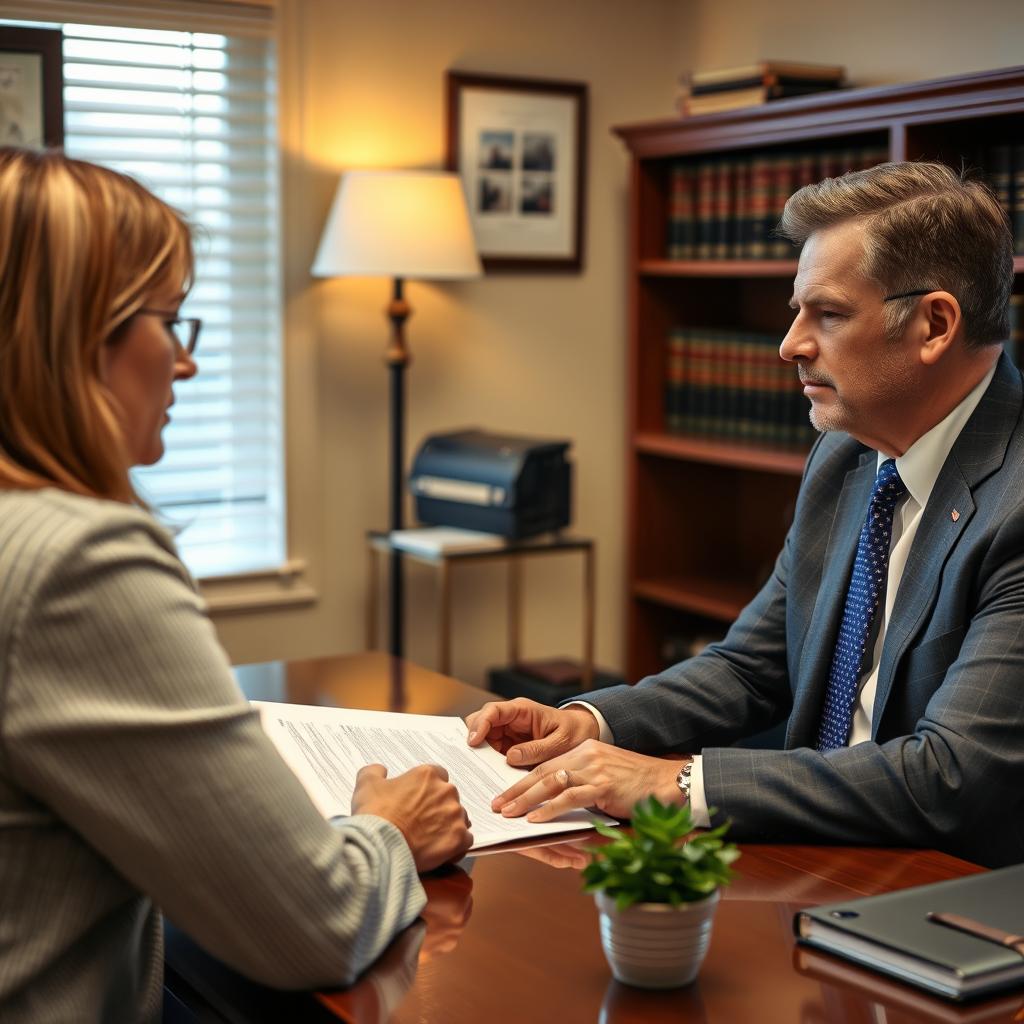
Paternity Lawyer Fauquier County, VA
Establishing legal paternity in Fauquier County affects custody, visitation, child support, and a child’s long‑term sense of identity. The process is governed by Virginia law, most notably Va. Code § 20‑49.1 et seq., and unfolds in the Fauquier County Juvenile and Domestic Relations District Court. Whether you are a mother seeking a support order, a father wanting to secure parental rights, or a child in need of a legally recognized relationship, the path forward requires familiarity with local court procedures and statutory requirements. Mr. Sris, the Owner and Founder of Law Offices Of SRIS, P.C., has practiced family law in Virginia since 1997 and together with his Of Counsel team represents clients throughout Fauquier County and Northern Virginia. To discuss your paternity matter, reach our firm at (888) 437‑7747. Law Offices Of SRIS, P.C. – Advocacy Without Borders.
What Paternity Establishment Means in Fauquier County, Virginia
Paternity establishment is the legal process of naming—and recognizing—a child’s biological father. In Virginia, a child born to unmarried parents has no automatic legal father, which means that until paternity is proven or voluntarily acknowledged, a mother retains sole custody, and the child has no right to support from or inheritance through the father. Acknowledgment or adjudication of paternity unlocks important rights and obligations: the father gains standing to seek custody or visitation, the child becomes eligible for health insurance and survivor benefits from the father, and both parents can access child‑support orders calculated under Virginia’s guidelines (Va. Code § 20‑108.1). The Fauquier County Juvenile and Domestic Relations (J&DR) District Court, located at 6 Court Street in Warrenton, hears paternity petitions, manages genetic‑testing orders, and enters legal findings of paternity. For families that later marry or divorce, the Fauquier County Circuit Court—only steps away in the historic Warrenton courthouse—may address paternity within a broader divorce or equitable‑distribution proceeding.
Fauquier County sits in Virginia’s Twentieth Judicial District and spans a mix of suburban communities and rural stretches, with Warrenton, Bealeton, Marshall, New Baltimore, and The Plains as the county’s population centers. A large share of the county’s families commute into the Washington, D.C., metro area, which often means that custody, visitation, and support schedules must take a working parent’s travel pattern into account. The local J&DR court judges evaluate paternity under the statutory framework of Va. Code § 20‑49.1 and apply the same best‑interest standard for custody that governs all Virginia family‑law matters (Va. Code § 20‑124.3). Because paternity can be established voluntarily through a signed Acknowledgment of Paternity form or, when dispute exists, through a court‑ordered genetic test, the procedure varies substantially from one case to the next. Having counsel who understands how the Fauquier County J&DR court manages paternity dockets, when to request genetic testing, and how to coordinate a custody or support order at the same time can make the process significantly more manageable.
How Mr. Sris and His Of Counsel Handle Paternity Cases in Fauquier County
When a client contacts Law Offices Of SRIS, P.C. about a paternity issue in Fauquier County, Mr. Sris and his Of Counsel team first identify the client’s specific legal objective—whether that is to establish paternity for child‑support purposes, to secure a father’s custody rights, to challenge an inaccurate acknowledgment, or to resolve a dispute over parentage. The team reviews whether an Acknowledgment of Paternity has already been signed (and whether it is contested), gathers relevant family history, and assesses whether a genetic test is necessary. In Virginia, any party to a paternity proceeding may request DNA testing, and the court will typically grant the request if it is reasonably in the child’s interest. Mr. Sris and his Of Counsel then work to ensure that a timely motion is filed, that the appropriate laboratory is designated, and that test results are properly introduced at the Fauquier County J&DR Court.
Following a test—or when paternity is undisputed—the firm helps clients craft a parenting plan that addresses legal custody, physical custody, and visitation, while also calculating child‑support obligations under the statutory guidelines. If the parties cannot agree, the matter proceeds to a contested hearing in the J&DR court. Mr. Sris, drawing on decades of trial experience, presents the facts and legal arguments necessary to protect the client’s interests. Because the J&DR court’s orders are appealable de novo to the Circuit Court, the firm prepares every case as though it could reach the Circuit Court, ensuring that the record is fully developed. Throughout the process, the team remains focused on achieving a resolution that serves the child’s welfare while advancing the client’s legal position.
About Mr. Sris and His Of Counsel Team
Mr. Sris, Owner and Founder of Law Offices Of SRIS, P.C., founded the firm in 1997 and brings a practical, trial‑tested perspective to every family law matter he handles. Before entering private practice, Mr. Sris served as a former prosecutor, an experience that sharpened his ability to evaluate evidence, cross‑examine witnesses, and advocate persuasively in the courtroom. He testified before the Virginia House Courts of Justice Committee in support of 2019 HB 635 (chief patron Del. David Bulova). Mr. Sris is admitted to practice in Virginia, Maryland, the District of Columbia, New Jersey, and New York, and he concentrates his work on family law, criminal defense, and immigration matters. His hands‑on approach means that clients in Fauquier County benefit from direct strategic oversight at every stage of a paternity case.
Working closely with Mr. Sris is a team of dedicated Of Counsel attorneys who bring extensive combined legal experience to the firm’s family law practice. Results may vary. These professionals—former prosecutors, former law enforcement, and seasoned litigators—assist with motion practice, discovery, settlement negotiations, and trial preparation. While Mr. Sris maintains overall responsibility for the strategic direction of each case, the Of Counsel team contributes deep subject‑matter knowledge and diligent support, provides clients with thorough, well‑prepared representation. Together, the firm has handled family law matters in courts throughout Virginia for more than two decades.
Frequently Asked Questions About Paternity in Fauquier County
What is legal paternity in Virginia?
Legal paternity is the court‑recognized relationship between a father and a child born to unmarried parents, granting the father rights and imposing obligations for custody, visitation, and child support. In Virginia, establishing paternity can happen in two primary ways: the parents may voluntarily sign an Acknowledgment of Paternity form, which the Virginia Department of Social Services makes available, or a party may file a petition in the Juvenile and Domestic Relations District Court asking the court to adjudicate paternity. Once paternity is legally established, the father’s name can be placed on the child’s birth certificate, and both parents may pursue court orders for custody, parenting time, and financial support according to Virginia’s statutory guidelines.
How do I establish paternity in Fauquier County?
Paternity in Fauquier County is established by filing a petition in the Fauquier County Juvenile and Domestic Relations District Court, located at 6 Court Street in Warrenton. The petitioning party—often a mother seeking support or a father wanting legal recognition—requests that the court find paternity. If the alleged father voluntarily acknowledges paternity, the parties can sign an Acknowledgment of Paternity and submit it to the Virginia Department of Social Services; no court hearing may be necessary. When the father disputes parentage, the court will order genetic testing through an accredited laboratory. After the test results are received, the judge holds a hearing to enter an order establishing—or disestablishing—paternity. The court then retains jurisdiction to address custody, visitation, and child support in the same proceeding.
What rights does a father gain after paternity is established in Virginia?
Once paternity is legally established, the father obtains the right to petition for custody, request a parenting‑time schedule, and participate in major decisions affecting the child, including education, healthcare, and religious upbringing. He also assumes the obligation to provide financial support calculated under the Virginia child‑support guidelines. The father may object to the child’s relocation and must be given notice of any adoption proceeding. Additionally, the child becomes eligible for survivor benefits through the father, can inherit from his estate, and may gain access to the father’s health insurance. These rights and obligations can be modified later by the court if circumstances materially change.
Can paternity be challenged after it has been established in Virginia?
Yes, a finding of paternity may be challenged in Virginia under limited circumstances, most commonly when new genetic evidence shows that the previously adjudicated father is not the biological parent. The court may set aside a paternity order on the basis of fraud, duress, or material mistake of fact. A motion to reopen or modify must be filed in the same Fauquier County J&DR court that entered the original order. Time limitations apply, and the court will balance the child’s best interests against the request to disestablish paternity. Because these cases are procedurally complex and emotionally charged, anyone considering a challenge should consult an experienced family law attorney to discuss whether a motion is appropriate under the specific facts and applicable Virginia law.
Do I need a lawyer for a paternity case in Fauquier County?
You are not legally required to have an attorney to file or respond to a paternity petition in Fauquier County, but working with an experienced paternity lawyer helps protect your rights and can avoid procedural mistakes that delay a resolution. A paternity case may involve DNA testing, cross‑examination of witnesses, child‑support calculations under statutory guidelines, and the creation of a parenting plan that will govern your family for years. An attorney can ensure that evidence is properly introduced, that deadlines are met, and that any custody or support order reflects an accurate application of Virginia law. For a consultation about your paternity matter in Fauquier County, reach Mr. Sris and his Of Counsel at (888) 437‑7747.
To learn more about family law representation in nearby counties, visit our pages for Fairfax County family law, Prince William County family law, Stafford County family law, Loudoun County family law, and Arlington County family law.
For additional statutory and court information, consult Virginia Code Title 20 (Domestic Relations), the Virginia Judicial System website, and the Fauquier County General District Court page.
Attorney advertising. Prior results do not guarantee a similar outcome. Results may vary.
Case results depend on a variety of factors unique to each case.