
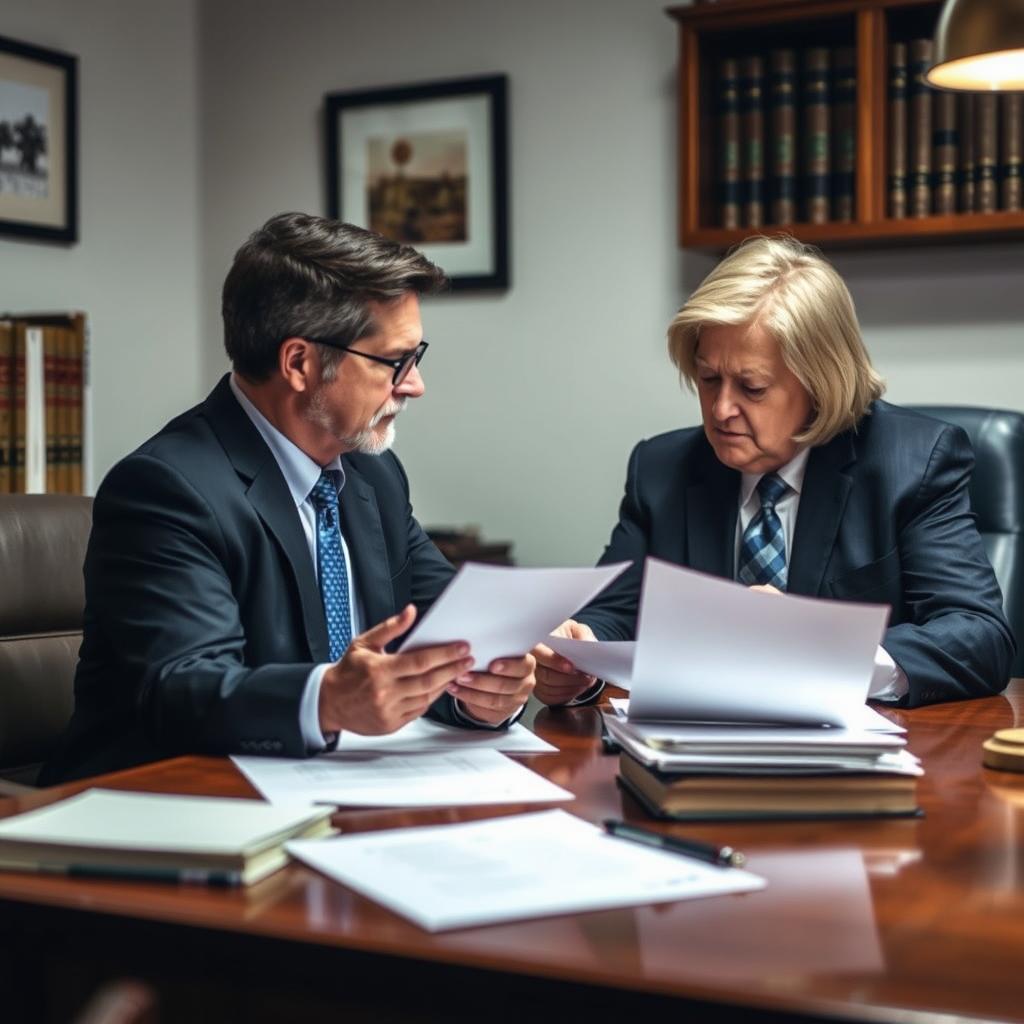
Felony Conviction Divorce Lawyer Louisa County, VA
You have just learned that your spouse has been convicted of a felony and sentenced to confinement for more than a year. The marriage you once planned together now feels like a legal entanglement you want to end. Virginia law gives you a clear path: a fault-based divorce on the ground that your spouse has been sentenced to prison for a felony. But filing for divorce in Louisa County means working with the Louisa County Circuit Court at 100 West Main Street, and the procedural steps can feel overwhelming when you are doing them alone. At Law Offices Of SRIS, P.C., Mr. Sris and his Of Counsel have experience guiding clients through fault-based divorces across Virginia, including in Louisa County. We cannot change what happened, but we can help you take the next legal step toward resolution. To discuss your situation and learn how we can assist, call (888) 437-7747 to request a consultation. Law Offices Of SRIS, P.C. — Advocacy Without Borders.
What Felony Conviction Divorce Means in Louisa County
In Virginia, a spouse may file for divorce when the other spouse has been convicted of a felony and sentenced to confinement for more than one year. This is a fault-based ground under Virginia Code § 20-91(3). Unlike no‑fault divorce, which requires a separation period of six months or one year depending on whether the parties have a signed separation agreement, a fault‑based divorce on the ground of felony conviction generally does not require waiting out a separation period. This can be an important advantage when a spouse wants to finalize the divorce without further delay.
Louisa County family law matters are heard in the Louisa County Circuit Court, which has exclusive original jurisdiction over divorce suits under Virginia Code § 20‑96. The court’s address is 100 West Main Street, Louisa, VA 23093. Because the Circuit Court also handles equitable distribution, spousal support, and child custody when those issues are raised within a divorce action, a felony‑conviction divorce filed here can resolve all related family law matters in one proceeding. Serving the communities of Louisa, Mineral, and Zion Crossroads, Mr. Sris and his Of Counsel appear regularly in the Louisa County Circuit Court and understand the procedural expectations that apply to fault‑based divorce filings.
How Mr. Sris and His Of Counsel Handle Felony Conviction Divorce Cases
When you contact Law Offices Of SRIS, P.C., Mr. Sris and his Of Counsel first evaluate whether you meet the statutory requirements for a fault‑based divorce in Virginia. They confirm that your spouse has been convicted of a felony and sentenced to confinement for more than one year, that the court has jurisdiction, and that you satisfy Virginia’s residency requirement under Va. Code § 20‑97. They then prepare and file a Complaint for divorce in the Louisa County Circuit Court, clearly stating the fault ground and any related claims for property division, spousal support, and child custody.
If your spouse is incarcerated, the firm handles service of process through the appropriate legal channels and explores whether issues such as child custody and equitable distribution can be resolved by agreement or will require a court hearing. Mr. Sris and his Of Counsel draw on extensive family law experience to present the case clearly and advocate for a result that aligns with your goals. Because every case is different, the firm tailors its approach to your circumstances—whether you are seeking a simple uncontested divorce based on the felony ground or must litigate contested property, support, or custody issues.
About Mr. Sris and His Of Counsel Team
Mr. Sris, Owner and Founder of Law Offices Of SRIS, P.C., has practiced law since 1997 and is admitted in Virginia, Maryland, the District of Columbia, New Jersey, and New York. A former prosecutor, Mr. Sris brings courtroom experience to every family law matter he handles. His legislative testimony before the Virginia House Courts of Justice Committee in support of 2019 HB 635 (chief patron Del. David Bulova) reflects a deep engagement with Virginia family law. Mr. Sris leads the firm’s family law practice alongside his Of Counsel, each of whom brings substantial litigation and family law background.
Mr. Sris and his Of Counsel bring over 120 years of combined legal experience. Results may vary. Mr. Sris and his Of Counsel have documented over 4,739 case results across all practice areas since 1997. The team serves clients throughout Virginia, including Louisa County, from the firm’s Richmond Location at 7400 Beaufont Springs Drive, Suite 300, Room 395, Richmond, VA 23225. By appointment. Call (888) 437-7747 to schedule.
Frequently Asked Questions
What is a felony conviction divorce in Virginia?
Under Virginia Code § 20-91, a spouse may seek a divorce when the other spouse has been convicted of a felony and sentenced to confinement for more than one year. This is a fault‑based ground that does not require the same waiting periods as a no‑fault divorce. The divorce is filed in the Louisa County Circuit Court, and the petitioner must prove the conviction and the sentence. The ground is available even if the conviction occurred in another state, so long as Virginia’s residency requirements are met.
Do I need a lawyer to file for a divorce based on my spouse’s felony conviction?
You are not legally required to hire a lawyer for a fault‑based divorce in Virginia, but legal guidance is strongly advised to protect your rights. The procedural rules in the Louisa County Circuit Court can be complex, and a misstep with pleadings, service, or property‑division requests can affect the outcome. Mr. Sris and his Of Counsel can help you prepare the necessary documents, ensure proper service on an incarcerated spouse, and advocate for a fair division of marital property and appropriate child custody orders.
How does my spouse’s incarceration affect child custody in Louisa County?
Incarceration for a felony is a factor courts consider in determining the best interests of the child under Virginia Code § 20-124.3. While incarceration does not automatically bar a parent from obtaining custody or visitation, the court will examine how the incarceration affects the parent’s ability to care for the child. Practical issues such as the length of the sentence, the child’s relationship with the incarcerated parent, and the availability of alternative caregivers are weighed. Mr. Sris and his Of Counsel can present evidence and argument to help the court reach a custody arrangement that serves the child’s best interests.
How is property divided when one spouse is in prison?
Virginia is an equitable distribution state; the court divides marital property fairly but not necessarily equally. The judge considers 11 statutory factors, including the contributions of each spouse, the duration of the marriage, and the circumstances that led to the divorce. A felony conviction can influence the equitable‑distribution analysis, particularly if financial misconduct or dissipation of assets is shown. The court can also award spousal support, taking into account the incarcerated spouse’s current ability to pay and future earning capacity.
How long does a fault-based divorce take in Louisa County?
Timelines vary by case complexity and court scheduling, but uncontested fault‑based divorces may resolve within a few months after filing at the Louisa County Circuit Court. If the divorce is contested or requires hearings on property division, spousal support, or custody, the process can extend longer. The court’s docket and the need to serve an incarcerated spouse through the Department of Corrections can also affect the timeline. Mr. Sris and his Of Counsel keep clients informed of progress and work to move the matter forward as efficiently as the circumstances allow.
Can I get a divorce while my spouse is incarcerated out of state?
Yes, Virginia courts have jurisdiction as long as the residency requirements are met, and you can serve the incarcerated spouse through appropriate interstate procedures. Under Virginia Code § 20‑97, at least one spouse must have been a bona fide resident and domiciliary of Virginia for at least six months before filing. The out‑of‑state spouse must be served according to the law of the state where they are incarcerated, which may require coordination with correctional officials. Mr. Sris and his Of Counsel manage these procedural steps so that the case can proceed without unnecessary delay.
What should I bring to a consultation about a felony conviction divorce?
Bring a copy of the conviction order or sentencing document, your marriage certificate, and any existing court orders regarding custody or support. Information about assets, debts, and income is also helpful so that Mr. Sris and his Of Counsel can assess the financial dimensions of your case. If you are unsure about any document, the firm can guide you on what is needed. Contact Law Offices Of SRIS, P.C. at (888) 437-7747 to schedule a consultation and receive a personalized list of documents to gather.
Explore our family law services in nearby Virginia localities:
Fairfax County family law representation ·
Fairfax City divorce attorneys ·
Prince William County divorce lawyers ·
Manassas family law services
Primary legal sources for Virginia divorce law:
Virginia Code § 20-91 (divorce grounds) ·
Virginia Courts
Attorney advertising. Prior results do not guarantee a similar outcome.
Results may vary.
Case results depend on a variety of factors unique to each case.