
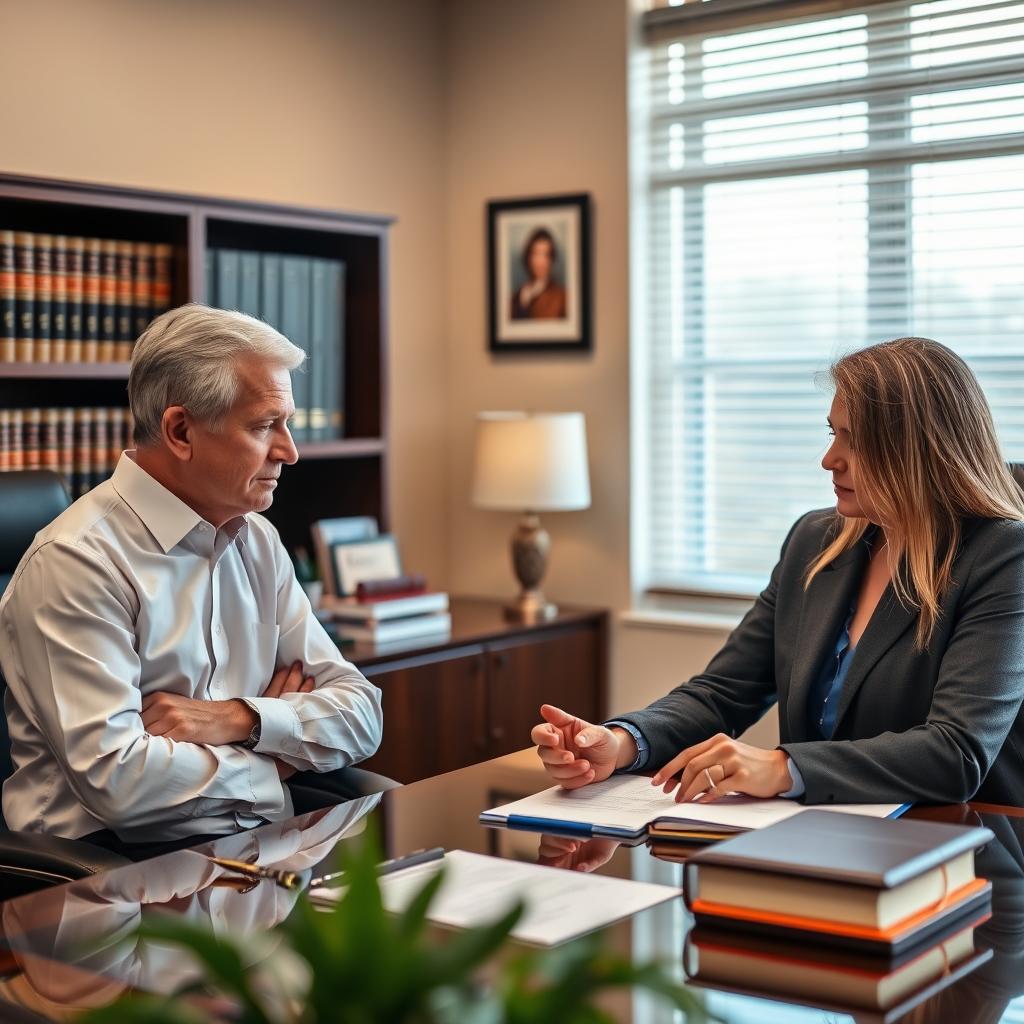
Fault Based Divorce Lawyer Louisa County, VA
You come home early and find evidence of an affair. Or your spouse’s repeated cruelty has made the marriage unbearable. You want to end the marriage now—not wait a year for a no-fault divorce. In Louisa County, Virginia, filing for a fault-based divorce can change your timeline and your financial outcome. Grounds like adultery, cruelty, or desertion may eliminate the mandatory separation period and can affect spousal support and property division. Mr. Sris and his Of Counsel team at Law Offices Of SRIS, P.C. represent clients in fault-based divorce proceedings in Louisa County. Call (888) 437-7747 to discuss your situation.
Your Strategy Options
Virginia Code § 20‑91 [Citation verified] lists several fault grounds for divorce. The one you choose shapes the evidence you need and the pace of your case. Adultery, for instance, requires clear and convincing proof but allows a divorce without any separation period. Cruelty and desertion require more detailed factual development. A felony conviction with imprisonment of more than one year is another statutory ground. Mr. Sris, a former prosecutor, works with his Of Counsel team to evaluate which ground fits your circumstances and to gather the necessary evidence. Because fault can also influence spousal support and the division of marital property under Virginia’s equitable distribution rules, the strategic decision matters well beyond the divorce decree itself.
If you are unsure whether you can prove fault, consider the practical alternatives. A no-fault divorce based on separation is always available, and the parties can still negotiate a separation agreement that resolves support and property issues. Law Offices Of SRIS, P.C. helps clients weigh the cost, emotional toll, and potential benefit of a fault-based filing before moving forward.
What to Expect
Fault-based divorce cases begin with a Complaint filed in the Louisa County Circuit Court, located at 100 West Main Street, Louisa, VA 23093. The Circuit Court has exclusive jurisdiction over the divorce itself. Matters such as temporary spousal support, child custody, or protective orders may be heard in the adjoining Louisa County Juvenile and Domestic Relations District Court. When you engage Law Offices Of SRIS, P.C., Mr. Sris and his Of Counsel team prepare the pleadings, outline the factual allegations, and identify the corroborating evidence Virginia courts typically require. In an uncontested proceeding, even one based on fault, the court may need at least one corroborating witness. If your spouse contests the divorce, the case proceeds through discovery, motion practice, and—if necessary—a trial. The timeline depends on the court’s calendar and the complexity of the issues, but Mr. Sris and his Of Counsel work to move cases efficiently while protecting your interests.
Potential Consequences
Grounding a divorce on fault can affect the financial outcome of your case. Under Virginia’s equitable distribution statute, the court may consider fault when dividing marital property and determining whether—and how much—spousal support to award. For example, a spouse who committed adultery may be barred from receiving spousal support unless the court finds a manifest injustice would result. Fault may also influence the allocation of attorney fees. Because the stakes are high, Mr. Sris and his Of Counsel team approach fault-based divorce with a thorough investigation of the facts and a clear explanation of the possible consequences at every stage. Every case is unique; there are no predetermined outcomes.
Attorney Credentials
Mr. Sris, Owner and Founder of Law Offices Of SRIS, P.C., has been practicing since 1997. A former prosecutor, he brings a disciplined analytical approach to family law matters. He is admitted in Virginia, Maryland, the District of Columbia, New Jersey, and New York. His legislative experience includes testifying before the Virginia House Courts of Justice Committee in support of 2019 HB 635 (chief patron Del. David Bulova). Together with his Of Counsel colleagues—non‑employee attorneys engaged through Excella—Mr. Sris draws on over 120 years of combined legal experience, supported by 4,739+ documented firm-wide results. Results may vary.
Frequently Asked Questions
What is fault-based divorce in Virginia?
Fault-based divorce allows a court to end a marriage when one spouse’s misconduct meets statutory grounds under Va. Code § 20‑91 [Citation verified]. The recognized grounds include adultery, cruelty, willful desertion for one year, and conviction of a felony with imprisonment of more than one year. Unlike a no-fault divorce, a fault‑based divorce can be granted without a separation period if the ground is adultery. The spouse alleging fault must present evidence supporting the claim. Fault may also affect spousal support and property division.
How does adultery affect a divorce in Virginia?
Adultery is a fault ground that eliminates the required separation period and may bar the offending spouse from receiving spousal support. Under Va. Code § 20‑91 [Citation verified](1), adultery is grounds for an immediate divorce. Proving adultery requires clear and convincing evidence, which can include direct testimony, circumstantial evidence, or digital records. A finding of adultery can also influence equitable distribution and attorney fee awards. An experienced lawyer can help you evaluate the evidence and decide whether pursuing this ground is in your best interest.
Do I need to prove fault beyond a reasonable doubt?
No, fault in a divorce must be proven by clear and convincing evidence, not the criminal standard of beyond a reasonable doubt. This standard is lower than the criminal burden but higher than the “preponderance of the evidence” used in most civil cases. Concrete documentation and credible testimony are important. Mr. Sris, a former prosecutor, understands how to build a persuasive evidentiary record. He and his Of Counsel team work to gather the proof the court needs while avoiding unnecessary conflict.
How long does a fault-based divorce take in Louisa County?
A fault-based divorce based on adultery can be finalized as soon as the court hears the evidence, without any mandatory waiting period. For other fault grounds, the process may take longer if the facts are contested. The actual timeline will depend on the Louisa County Circuit Court’s calendar and the complexity of the issues. Cases that proceed to trial generally take longer than those that settle. Mr. Sris and his Of Counsel team strive to resolve matters as efficiently as the circumstances allow.
Can my spouse stop a fault-based divorce by denying the allegation?
A spouse can contest the allegation and require you to prove the fault ground in court, but a denial does not automatically prevent the divorce. If the other party disputes the facts, the case moves to an evidentiary hearing where both sides present evidence. The judge then decides whether the statutory ground has been met. Mr. Sris and his Of Counsel team prepare each case with the reality that contested fault claims often demand more preparation, but they handle such litigation regularly.
To request a consultation about a fault‑based divorce in Louisa County, call Law Offices Of SRIS, P.C. at (888) 437‑7747.
For a broader statutory analysis, see the firm’s comprehensive divorce overview. Official sources: Va. Code § 20‑91 [Citation verified] and Louisa County Circuit Court.
Our Richmond Location: 7400 Beaufont Springs Drive, Suite 300, Room 395, Richmond, VA 23225. By appointment only. Call (888) 437‑7747.
Attorney advertising. Prior results do not guarantee a similar outcome. Results may vary.
Case results depend on a variety of factors unique to each case.