
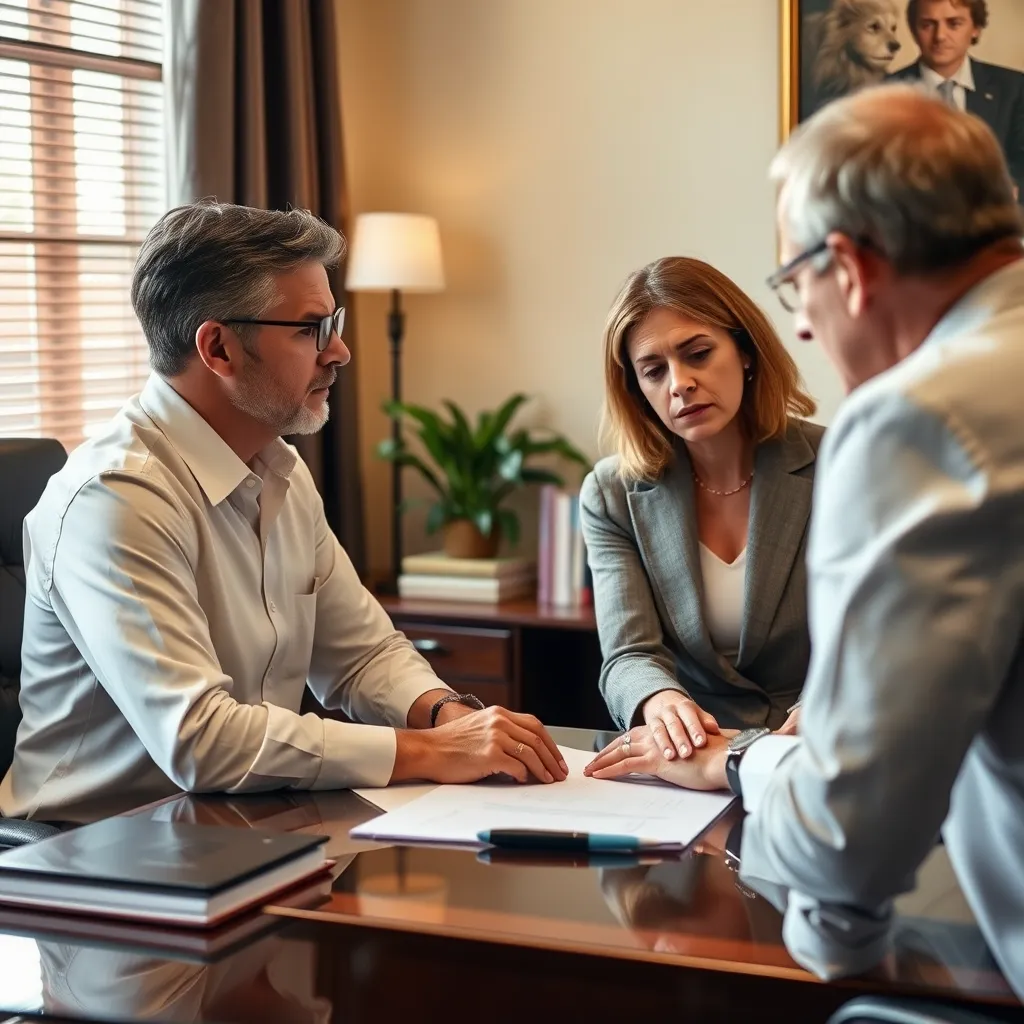
Family Law Lawyer Falls Church, VA
Family law matters in Falls Church, Virginia, unfold in the Falls Church General District Court and the Falls Church Circuit Court, both located at 300 Park Avenue, Suite 151W, Falls Church, VA 22046. The Circuit Court exercises exclusive jurisdiction over divorce, equitable distribution, and spousal support, while the Juvenile and Domestic Relations District Court handles standalone custody, visitation, child support, and protective orders. Navigating Virginia’s equitable distribution framework, the statutory best‑interest factors for children, and the specific procedural expectations of the Seventeenth Judicial District requires an experienced advocate who knows the local docket. Law Offices Of SRIS, P.C., founded in 1997, represents individuals and families throughout Falls Church and the wider Northern Virginia region. Mr. Sris, Owner and Founder, brings decades of trial‑focused experience to family law, supported by the firm’s Of Counsel attorneys whose backgrounds include former prosecution and law enforcement service. With over 10,000 clients served and more than 100 client reviews, the firm works to protect parental rights, secure fair property outcomes, and resolve disputes efficiently. To request a consultation, call (888) 437‑7747. Law Offices Of SRIS, P.C. – Advocacy Without Borders.
What Family Law Means in Falls Church, Virginia
Family law in Falls Church encompasses divorce, child custody, child support, spousal support, property division, and protective orders, all governed by Title 20 of the Virginia Code. Virginia is an equitable distribution state, not a community‑property state. Under Va. Code § 20‑107.3, the court classifies assets as marital, separate, or hybrid and distributes marital property fairly—but not necessarily equally—after weighing eleven statutory factors. The grounds for divorce are set out in § 20‑91: fault‑based grounds include adultery, cruelty, desertion for one year, and felony conviction with a one‑year‑plus sentence; no‑fault grounds require a six‑month separation if no minor children and a signed separation agreement exist, or a one‑year separation otherwise. At least one party must be a bona fide resident and domiciliary of Virginia for six months before filing.
Falls Church Circuit Court is the proper venue for a divorce complaint. The filing fee for a divorce complaint is approximately $86. Cases involving complex marital estates—business valuations, retirement accounts, or international assets—may require forensic accountants and skilled negotiation. Mr. Sris and the firm’s Of Counsel attorneys regularly appear in the Falls Church courts and understand the local procedural expectations, including the requirement for at least one corroborating witness in an uncontested divorce hearing. From the initial filing through a final decree, clients benefit from a team that is responsive to court scheduling and prepared for litigation if settlement efforts stall.
How Mr. Sris and the Firm’s Of Counsel Attorneys Handle Family Law Cases
Family law representation at Law Offices Of SRIS, P.C. begins with a thorough consultation in which the client’s goals and the factual landscape are carefully examined. Mr. Sris and the firm’s Of Counsel attorneys identify the most strategic path—whether that means negotiating a comprehensive separation agreement, pursuing temporary support or custody orders pendente lite, or preparing for trial. The firm’s Of Counsel attorneys bring backgrounds in litigation, criminal law, and law enforcement that sharpen their ability to evaluate evidence, cross‑examine witnesses, and spot procedural weaknesses in the opposing party’s case. This experience is particularly valuable in contested custody disputes, fault‑based divorce actions, and enforcement of support obligations.
Throughout the process, the team prioritizes clear communication and practical planning. In uncontested matters, the firm helps clients draft and finalize property settlement agreements that fully resolve all issues so that the divorce can proceed on a no‑fault basis. When litigation is necessary, Mr. Sris and the firm’s Of Counsel attorneys are prepared to present a compelling case before the Falls Church Circuit Court or the Juvenile and Domestic Relations District Court. The timeline for any case depends on the court’s calendar, the complexity of the issues, and the degree of conflict between the parties. The firm’s approach is to advance the client’s interests firmly while exploring every reasonable opportunity to resolve disputes without trial.
About Mr. Sris and the Firm’s Of Counsel Attorneys
Mr. Sris, Owner and Founder of Law Offices Of SRIS, P.C., has practiced across Virginia, Maryland, the District of Columbia, New Jersey, and New York since 1997. A former prosecutor, he brings a trial‑tested perspective to family law disputes, particularly those involving high‑conflict custody or complex asset division. Mr. Sris testified before the Virginia House Courts of Justice Committee in support of 2019 HB 635 (chief patron Del. David Bulova), a measure that revised Virginia’s equitable distribution statute. His deep familiarity with Virginia’s statutory framework and court system allows him to craft arguments that resonate with judges in the Seventeenth Judicial District.
The firm’s Of Counsel attorneys complement Mr. Sris’s experience with their own distinctive qualifications. Several are former prosecutors or former law enforcement officers with decades of courtroom and investigative insight. They handle the full spectrum of family law issues—divorce, custody, support, and domestic violence protective orders—with an emphasis on meticulous preparation and client advocacy. Every family law matter at the firm is supported by a collaborative team that draws on extensive combined legal experience. Clients receive attentive guidance from professionals who view each case through both a legal and a human lens.
Frequently Asked Questions
How long does a divorce take in Falls Church, Virginia?
An uncontested divorce with a signed separation agreement typically resolves within two to four months after filing, while a contested divorce can take nine to eighteen months or longer. The actual duration depends on the mandatory separation period, the court’s docket, and whether the parties settle. Falls Church Circuit Court schedules final hearings based on its calendar, and cases requiring forensic accounting or business valuation extend the timeline further. A pendente lite hearing for temporary support or custody may be set within a few weeks of the motion.
How much does a divorce cost in Falls Church?
The base court cost includes the $86 filing fee for a divorce complaint, plus approximately $12 for sheriff service of process. Private process servers charge between $50 and $100. If custody is contested, a guardian ad litem may be appointed; those fees generally range from $500 to $2,500 and up. Mediation costs about $100 to $300 per hour per party. Attorney fees vary by case complexity and the amount of negotiation or trial work required. The firm discusses fee expectations during an initial consultation.
Is Virginia a community property state?
No, Virginia is an equitable distribution state, not a community property state. Under Va. Code § 20‑107.3, marital property is divided fairly, but not necessarily equally, after the court considers eleven factors such as the duration of the marriage, each spouse’s contributions, and the circumstances surrounding the dissolution. Separate property owned before the marriage or acquired by gift or inheritance is retained by the owner. The Falls Church Circuit Court decides property division in divorce cases.
How is child custody decided in Falls Church, Virginia?
Custody is determined by the best interests of the child under Va. Code § 20‑124.3, which requires the court to evaluate ten statutory factors. Those factors include each parent’s relationship with the child, each parent’s ability to support the child’s emotional and developmental needs, the child’s preferences if of suitable age, and any history of family abuse. The Falls Church Juvenile and Domestic Relations District Court hears standalone custody and visitation petitions; when custody is part of a divorce, the Circuit Court addresses it. The court may order joint legal custody, joint physical custody, or sole custody depending on the circumstances.
What are the grounds for divorce in Virginia?
Virginia recognizes both fault and no‑fault grounds. Fault grounds include adultery (which carries no separation waiting period), cruelty, willful desertion for one year, and conviction of a felony resulting in imprisonment for more than one year. No‑fault divorce is available after a one‑year separation, or after just six months if no minor children are involved and the parties have signed a separation agreement. All divorce complaints must be filed in the circuit court—in Falls Church, the Falls Church Circuit Court at 300 Park Avenue.
Do I need a lawyer for a family law matter in Falls Church?
While you are not required by law to have an attorney, a family law lawyer can protect your rights and help you avoid costly procedural pitfalls. Virginia’s equitable distribution and child‑custody statutes involve nuanced factors that can significantly influence the outcome. A lawyer can negotiate a comprehensive separation agreement, properly serve the other party, meet the court’s documentary requirements, and present evidence effectively. For contested custody or divorce cases, experienced representation is especially important. The firm offers consultations to review your situation and explain the options.
Related family law services:
Family Law Lawyer Fairfax County, VA |
Family Law Lawyer Fairfax, VA |
Family Law Lawyer Prince William County, VA |
Family Law Lawyer Manassas, VA |
Family Law Lawyer Manassas Park, VA
Virginia legal resources:
Virginia Code Title 20 (Domestic Relations) |
Falls Church Circuit Court |
Virginia State Bar
Attorney advertising. Prior results do not guarantee a similar outcome.
Results may vary.
Case results depend on a variety of factors unique to each case.