
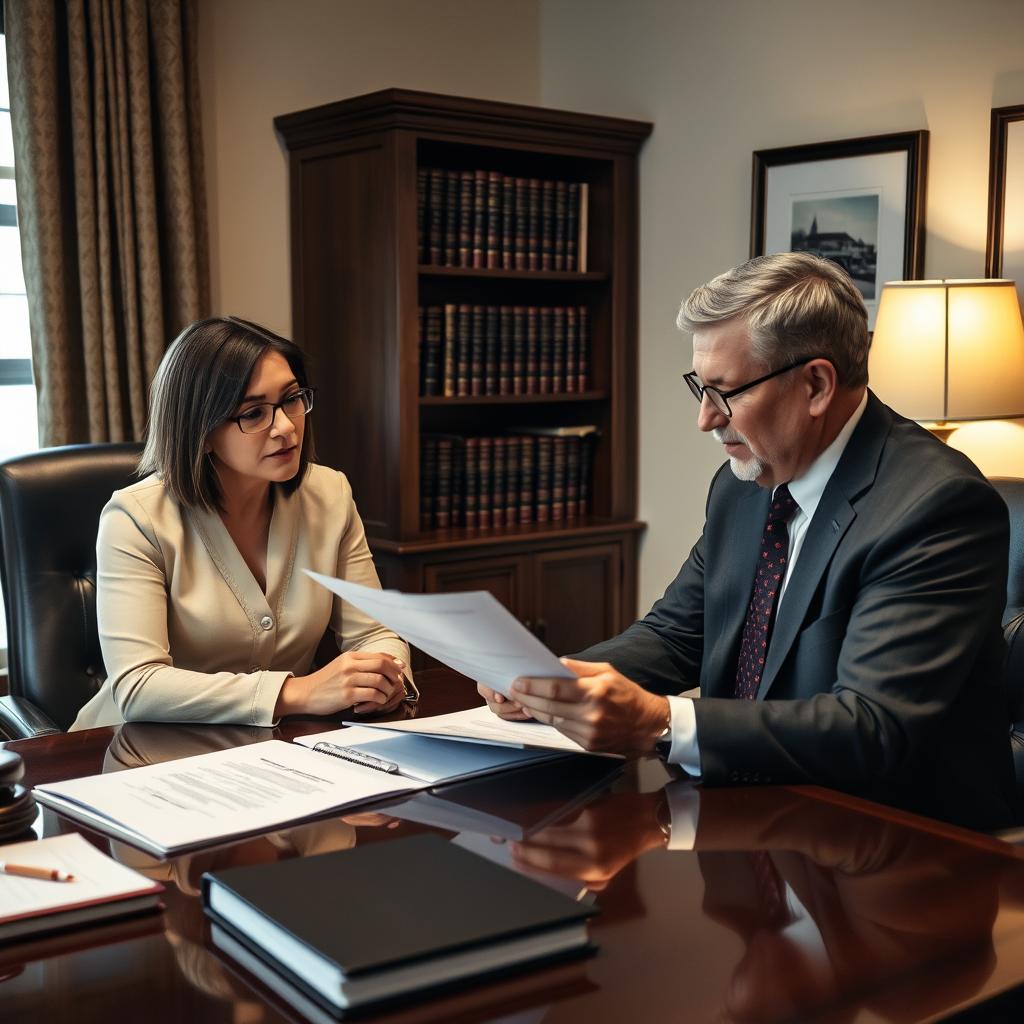
Equitable Distribution Lawyer Rockingham County, VA
Dividing marital property in a Virginia divorce falls under equitable distribution, governed by Va. Code § 20-107.3. In Rockingham County, the Circuit Court at 53 Court Square in Harrisonburg has exclusive jurisdiction over divorce and property division. The court classifies all assets and debts as marital, separate, or hybrid, then divides the marital estate based on a set of statutory factors. Equitable does not mean equal — the judge weighs each spouse’s contributions, the length of the marriage, and the circumstances that led to the divorce. Disputes often involve retirement accounts, business interests, real estate, and inheritance claims. Mr. Sris and the firm’s Of Counsel attorneys handle these matters for clients throughout Rockingham County, including Harrisonburg, Bridgewater, Dayton, Elkton, Timberville, and Broadway. To discuss your specific situation, reach Law Offices Of SRIS, P.C. at (888) 437-7747. Law Offices Of SRIS, P.C. – Advocacy Without Borders.
How Equitable Distribution Works in Rockingham County
Rockingham County Circuit Court follows Virginia’s equitable distribution statute. The process begins with identifying and classifying all property. Marital property is everything acquired during the marriage other than gifts or inheritances to one spouse. Separate property — owned before the marriage or received individually as a gift or inheritance — remains with that spouse. The court may also find hybrid property where marital and separate funds are commingled.
Once classified, the property is valued. For homes, cars, and bank accounts, valuation is often straightforward. Business interests, professional practices, stock options, and retirement accounts require more analysis, sometimes involving forensic accountants or business valuation attorneys. The court then divides the marital share after considering the factors listed in Va. Code § 20-107.3. These include each spouse’s monetary and non-monetary contributions, the duration of the marriage, tax consequences, and the ages and health of the parties. A signed separation agreement can resolve all property issues without trial, but when the parties cannot agree, the judge decides after hearing evidence.
Frequently Asked Questions
What is equitable distribution in Virginia?
Equitable distribution is the method Virginia courts use to divide marital property in a divorce — it means a fair, not necessarily equal, division. The court evaluates 11 factors under Va. Code § 20-107.3 to decide how to split assets and debts. Unlike community property states that divide everything 50/50, Virginia judges consider each spouse’s contributions, the marriage’s length, and the reasons for the divorce. Separate property is excluded.
Which court handles equitable distribution in Rockingham County?
The Rockingham County Circuit Court at 53 Court Square, Harrisonburg, VA 22801 handles all divorce and equitable distribution matters. The Juvenile and Domestic Relations District Court addresses custody, visitation, and support, but property division is exclusively in Circuit Court. The Shenandoah location of Law Offices Of SRIS, P.C. represents clients throughout Rockingham County, including Harrisonburg, Bridgewater, Dayton, Elkton, Timberville, and Broadway.
Can we reach a property settlement agreement instead of going to court?
Yes, spouses can sign a written separation agreement that resolves all property, support, and custody issues without a trial. In Virginia, that agreement must be signed by both parties. Once incorporated into the final divorce decree, it becomes enforceable. Reaching an agreement often saves time, reduces conflict, and gives the parties more control over the outcome. An attorney can help draft an agreement that complies with Va. Code § 20-107.3 and protects your financial interests.
What if my spouse is hiding assets?
The discovery process in a divorce allows your attorney to request financial documents, depositions, and interrogatories to uncover hidden assets. Forensic accountants may trace funds, review tax returns, and examine bank records. If a spouse conceals assets, the court can consider that misconduct as one of the equitable distribution factors and may award a larger share to the other spouse or impose sanctions. Prompt action is important because once assets are moved or spent, recovery becomes more difficult.
How are retirement accounts divided in a Virginia divorce?
Retirement accounts like 401(k)s, IRAs, and pensions are generally marital property to the extent they were accrued during the marriage. A Qualified Domestic Relations Order (QDRO) is often required to divide certain plans without early-withdrawal penalties. The 2019 revision to Va. Code § 20-107.3(g) addressed procedural issues related to retirement account division. Mr. Sris testified before the Virginia House Courts of Justice Committee in support of 2019 HB 635 (chief patron Del. David Bulova), which became that revision.
How is a business valued in equitable distribution?
Business valuation in a Virginia divorce usually involves a qualified appraiser who examines financial statements, tax returns, goodwill, and market conditions. If the business was started or grown during the marriage, its increase in value may be marital property. The owner-spouse may buy out the other spouse’s share or other assets may be offset. Because valuing a closely held business requires specialized analysis, early engagement of a financial experienced attorney is advisable.
Do I need a lawyer for equitable distribution?
You are not legally required to have a lawyer, but equitable distribution involves complex legal and financial issues that can have long-term consequences. A misclassified asset or an improperly drafted QDRO can cost you significantly. An experienced attorney can identify marital versus separate property, arrange for needed attorneys, and negotiate a fair settlement. For guidance on your specific situation, reach Law Offices Of SRIS, P.C. at (888) 437-7747.
What factors does the court consider when dividing property?
Virginia courts apply 11 factors under Va. Code § 20-107.3, including each spouse’s contributions to the marriage, the length of the marriage, ages and health, the causes of the divorce, and the tax consequences of the division. Non-monetary contributions — such as homemaking and child-rearing — are specifically recognized. The court also looks at how and when property was acquired and any debts. No single factor controls; the judge weighs them all to reach an equitable result.
How long does equitable distribution take in Rockingham County?
The timeline depends on whether the parties reach an agreement and on the court’s calendar. An uncontested divorce with a signed separation agreement that resolves all property issues can be finalized relatively quickly after meeting Virginia’s separation requirements. Contested equitable distribution, especially when business valuations or custody disputes are involved, takes longer. The Rockingham County Circuit Court sets a scheduling order after the complaint is filed. To discuss the likely timeline for your case, contact Law Offices Of SRIS, P.C. at (888) 437-7747.
What is the difference between marital and separate property?
Marital property is everything acquired by either spouse during the marriage, regardless of whose name is on the title, unless it is a gift or inheritance from a third party. Separate property is what each spouse owned before the marriage or received individually as a gift or inheritance. The court presumes that property acquired during the marriage is marital. Commingled assets can be partly marital and partly separate, requiring tracing to determine each share.
What if my spouse and I reconcile after filing?
Reconciliation generally halts the divorce proceeding, and the parties can ask the court to dismiss the case. However, any assets transferred or spent during the separation period may still be considered in a later equitable distribution if the divorce is refiled. If you are considering reconciliation, speak with your attorney about steps to protect your financial position before asking the court to dismiss the case.
About Mr. Sris and the Firm’s Of Counsel Attorneys
Mr. Sris, Owner and Founder of Law Offices Of SRIS, P.C., practices in Virginia, Maryland, the District of Columbia, New Jersey, and New York. He is a former prosecutor who has handled family law matters since 1997. Mr. Sris testified before the Virginia House Courts of Justice Committee in support of 2019 HB 635, the legislation that revised Va. Code § 20-107.3(g) regarding retirement benefit division in equitable distribution. The firm’s Of Counsel attorneys bring experience in complex property division, business valuation, and marital settlement agreements. Together, Mr. Sris and the firm’s Of Counsel attorneys represent clients in Rockingham County Circuit Court and across the Shenandoah Valley.
See also: Family Law Lawyer Rockingham County | Family Law Shenandoah County | Family Law Frederick County | Family Law Warren County | Family Law Augusta County
Additional resources: Va. Code § 20-107.3 (equitable distribution) | Rockingham County Circuit Court
Attorney advertising. Prior results do not guarantee a similar outcome. Results may vary.
Case results depend on a variety of factors unique to each case.