
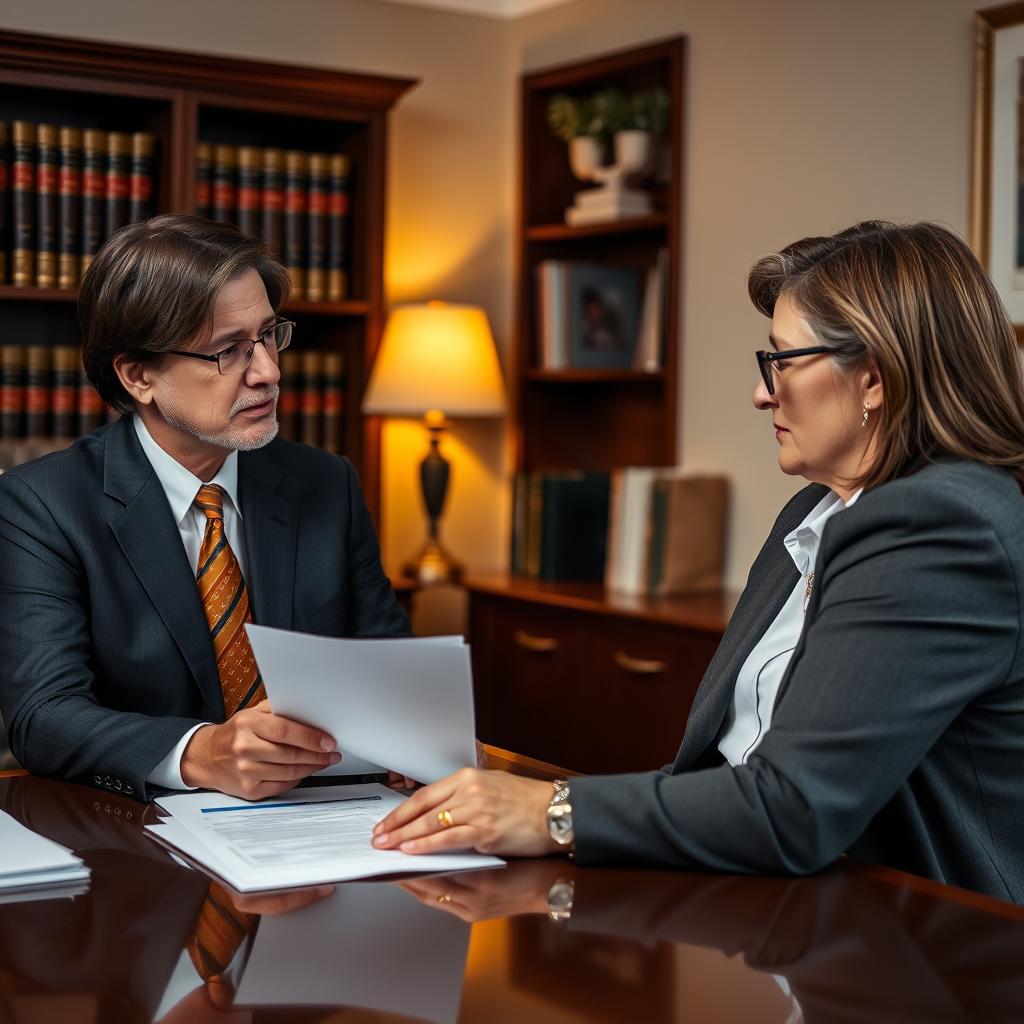
Equitable Distribution Lawyer Louisa County, VA
Equitable distribution is the process through which marital property is divided when a marriage ends in Virginia. Unlike community property states that split assets equally, Virginia courts divide property based on what is fair after weighing 11 statutory factors. In Louisa County, equitable distribution matters are heard before the Louisa County Circuit Court at 100 West Main Street, Louisa. The court considers the length of the marriage, each spouse’s contributions, and the economic circumstances of each party when determining a just division. For individuals facing a divorce that involves a family business, retirement accounts, real estate, or other complex assets in Louisa County, working with an experienced attorney is essential to protect your financial interests. Mr. Sris and the firm’s Of Counsel attorneys represent clients in equitable distribution disputes throughout Louisa County, including the communities of Louisa, Mineral, and Zion Crossroads. Law Offices Of SRIS, P.C., with a Richmond location serving the region, may be reached at (888) 437-7747. Law Offices Of SRIS, P.C. – Advocacy Without Borders.
What Equitable Distribution Means in Louisa County
Virginia is an equitable distribution state, meaning the court divides marital property fairly but not necessarily equally. The governing statute, Va. Code § 20-107.3, directs the circuit court—including the Louisa County Circuit Court—to first classify assets as marital, separate, or hybrid, then value them, and finally distribute them equitably. Marital property generally includes everything acquired during the marriage by either spouse, excluding gifts from third parties or inheritances received by one spouse alone. Separate property is that which was owned before the marriage or acquired after the marriage by gift or inheritance. In Louisa County, as in all Virginia jurisdictions, the court may also consider the circumstances and factors that contributed to the dissolution of the marriage, including any fault grounds proven, when determining an equitable award.
In practice, equitable distribution in Louisa County can involve real estate holdings in the rural parts of the county, family businesses located in Mineral or Zion Crossroads, or retirement accounts and pension plans built up by a spouse who works in Richmond or Charlottesville. The geographic location of Louisa County—situated between Richmond and Charlottesville within the Sixteenth Judicial District—means that many divorcing couples hold assets that span multiple jurisdictions. A careful inventory and valuation of all marital property is necessary to ensure the court has the complete picture. The court may also consider the tax consequences of a division, the liquid versus non-liquid nature of assets, and any debts of the parties. Mr. Sris and the firm’s Of Counsel attorneys are experienced in identifying and valuing complex marital estates for equitable distribution proceedings in Louisa County Circuit Court.
How Mr. Sris and the Firm’s Of Counsel Attorneys Handle Equitable Distribution Cases
When representing a client in an equitable distribution matter in Louisa County, Mr. Sris and the firm’s Of Counsel attorneys begin by conducting a thorough assessment of all marital and separate property. This includes reviewing financial records, real estate deeds, business valuation reports, and retirement account statements. If needed, the firm engages forensic accountants and business valuation professionals to trace assets and determine fair market values. Negotiation with the other party’s counsel and, where possible, reaching a written separation agreement that resolves property division without trial is a primary objective. A signed separation agreement can significantly streamline the process and reduce the emotional and financial costs of litigation.
When settlement is not possible, Mr. Sris and the firm’s Of Counsel attorneys prepare the case for trial before the Louisa County Circuit Court. Virginia requires at least one corroborating witness for an uncontested divorce hearing, and the same careful preparation is necessary when equitable distribution issues are contested. The court’s scheduling and the complexity of the assets at issue—especially when business valuations or qualified domestic relations orders (QDROs) for retirement plans are involved—can extend the timeline, but the firm works to move the matter forward efficiently. The goal in every equitable distribution case is to achieve a division that protects the client’s long-term financial stability, using the statutory factors set out in Va. Code § 20-107.3 as the guiding framework.
About Mr. Sris and the Firm’s Of Counsel Attorneys
Mr. Sris, Owner and Founder of Law Offices Of SRIS, P.C., has practiced law since 1997. A former prosecutor, Mr. Sris now concentrates his practice on family law, including complex equitable distribution matters in Virginia. He testified before the Virginia House Courts of Justice Committee in support of 2019 HB 635 (chief patron Del. David Bulova). Mr. Sris is admitted in Virginia, Maryland, the District of Columbia, New Jersey, and New York. Alongside Mr. Sris, the firm’s Of Counsel attorneys bring extensive combined legal experience in family law litigation and negotiation. Mr. Sris and the firm’s Of Counsel attorneys work together to evaluate each case, assess the marital estate, and craft a strategy that aligns with the client’s goals. Results may vary.
Law Offices Of SRIS, P.C. maintains a Richmond location that serves Louisa County clients. The firm’s attorneys appear regularly in Louisa County Circuit Court and are familiar with the local procedures and the court’s expectations regarding property division. Whether the case involves a small marital home or a complex estate with multiple businesses, retirement accounts, and investment portfolios, Mr. Sris and the firm’s Of Counsel attorneys approach equitable distribution with a detailed, methodical process designed to seek a fair resolution.
Frequently Asked Questions
What is equitable distribution in Virginia?
Equitable distribution is the process by which a Virginia court divides marital property and debts fairly, though not necessarily equally, based on factors set out in Va. Code § 20-107.3. Marital property includes assets and debts acquired during the marriage, while separate property—owned before the marriage or received as a gift or inheritance—remains with the original owner. The court classifies, values, and distributes property after considering factors such as the duration of the marriage, each spouse’s contributions, and the economic circumstances of the parties.
How does equitable distribution work in Louisa County, Virginia?
In Louisa County, equitable distribution is handled by the Louisa County Circuit Court at 100 West Main Street, Louisa. The court follows the same Virginia statutory framework as any other circuit court, but timelines and procedural nuances can vary. After property is classified and valued, the court applies the 11 statutory factors to decide what division is equitable. A separation agreement signed by both parties can resolve all property issues without trial, but if the parties cannot agree, a judge makes the final determination after a hearing.
What factors does the court consider when dividing property in a Virginia divorce?
Virginia Code § 20-107.3 lists 11 factors the court must consider for equitable distribution. These include the monetary and non-monetary contributions of each party to the family’s well-being, the duration of the marriage, the ages and physical and mental condition of the parties, the circumstances experienced to the divorce, how and when specific property was acquired, the debts of each spouse, the liquid or non-liquid character of the property, and the tax consequences of a proposed division. The court may also consider any other factor it deems relevant to achieving a fair result.
How can a lawyer help with equitable distribution in Louisa County?
An experienced equitable distribution lawyer can help identify, classify, and value all marital and separate property, negotiate a separation agreement, and, if necessary, present your case in Louisa County Circuit Court. A lawyer can also work with forensic accountants to uncover hidden assets, properly value a business or professional practice, and ensure retirement accounts are divided through a qualified domestic relations order. Mr. Sris and the firm’s Of Counsel attorneys provide representation throughout the equitable distribution process, from initial asset inventory to final decree.
Is Virginia a community property state?
No, Virginia is not a community property state. Instead, it follows the equitable distribution model. This means the court divides property fairly based on the facts of the case rather than automatically splitting assets 50/50. Separate property—items owned before marriage or acquired by gift or inheritance—generally remains with the owning spouse and is not subject to division. The classification and valuation of property are often the main points of contention in a Louisa County divorce.
How long does the equitable distribution process take in Louisa County?
The timeline for equitable distribution in Louisa County depends on whether the parties can agree on a property settlement and the complexity of the marital estate. An uncontested case with a signed separation agreement may be resolved in a matter of months after filing, while contested cases involving business valuations, multiple real estate holdings, or disputed separate property claims can extend over a year. The court’s calendar and the need for expert reports also affect the timeline. Consulting an attorney early can help streamline the process.
Attorney advertising. Prior results do not guarantee a similar outcome. Results may vary.
Case results depend on a variety of factors unique to each case.