
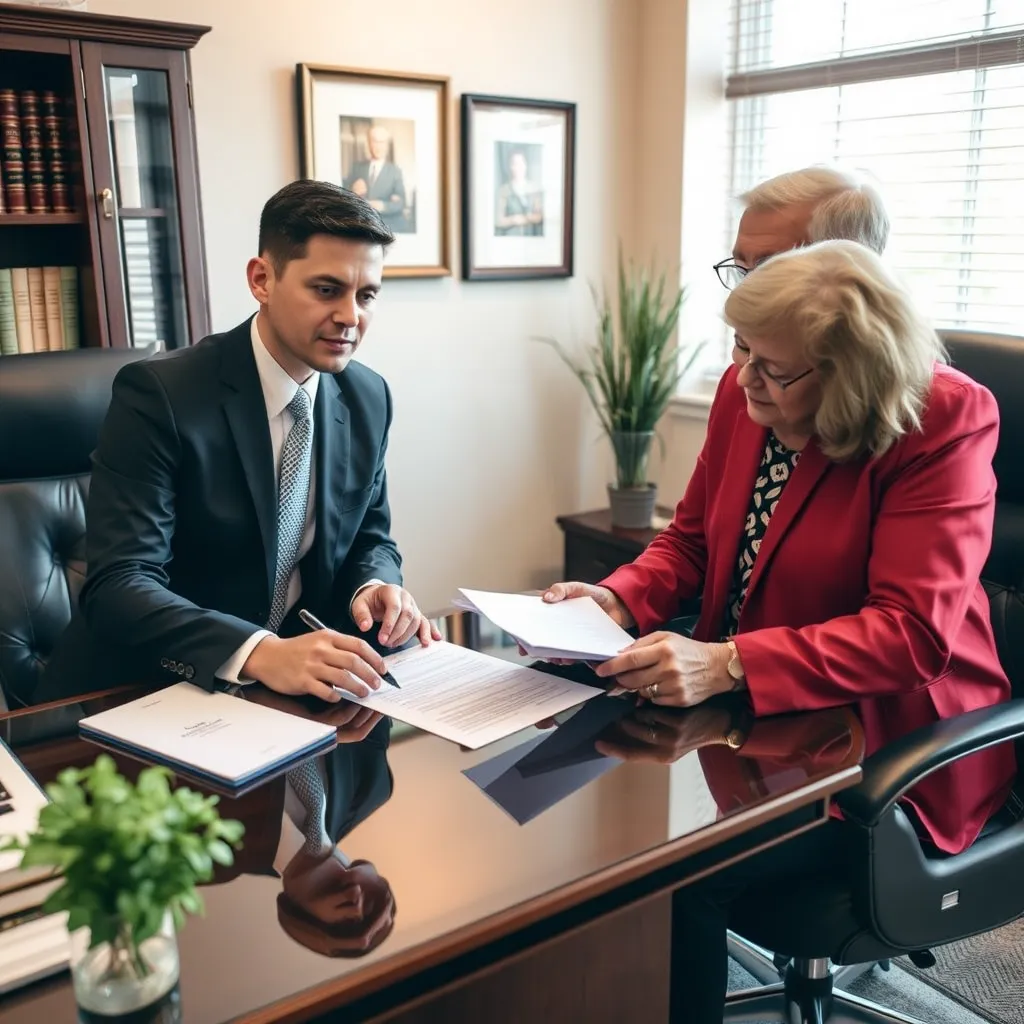
Child Support Establishment Lawyer Poquoson, VA
Establishing a child support order in Poquoson, Virginia, requires navigating specific statutes and court procedures that directly affect a family’s financial stability. Whether you are a custodial parent seeking support for the first time or a parent named in a petition, the process involves the Poquoson Juvenile and Domestic Relations District Court and, in divorce cases, the Poquoson Circuit Court. Law Offices Of SRIS, P.C. brings decades of family law experience to these matters. Mr. Sris, Owner and Founder, and his Of Counsel team concentrate a significant portion of their practice on family law issues, including child support establishment under Virginia Code § 20‑108.1 and § 20‑108.2. Reach our Richmond location, which serves clients in Poquoson, at (888) 437‑7747. Law Offices Of SRIS, P.C. – Advocacy Without Borders.
What Child Support Establishment Means in Poquoson
Child support establishment is the legal process of obtaining a court order that sets a parent’s financial obligation for the care of a minor child. In Poquoson, an independent city along the Chesapeake Bay, these matters are heard in the Eighth Judicial District. The Poquoson Juvenile and Domestic Relations District Court handles standalone petitions for custody, visitation, and child support when the parents are not married or when a support order is sought outside a divorce. If child support is part of a divorce or equitable distribution action, the Poquoson Circuit Court at 500 City Hall Avenue has jurisdiction. Virginia is an equitable distribution state, and child support is calculated under statutory guidelines that consider the combined gross income of both parents and the number of children.
Because Poquoson is a small waterfront community, many families have ties to the nearby York County border and the broader Hampton Roads region. The local court’s calendar and procedural expectations can influence the timeline of a case. Mr. Sris and his Of Counsel are familiar with the practices of the Poquoson courts and work to present income documentation, parenting-time schedules, and other necessary evidence in a manner that aligns with the statutory factors the court must consider.
How Mr. Sris and His Of Counsel Handle Child Support Establishment Cases
When a parent seeks to establish child support, the first step is filing a petition with the appropriate court. Mr. Sris and his Of Counsel review the financial circumstances of both parents, calculate the presumptive guideline amount, and identify any factors that may warrant a deviation from the guideline. Virginia’s child support guidelines, codified at Va. Code § 20‑108.2, provide a formula, but the court may adjust the amount based on factors such as the cost of health insurance, significant medical expenses, and special educational needs.
The team prepares a thorough presentation of each parent’s income, employment history, and child‑care expenses. If the other parent is self‑employed, has irregular income, or resides in another state, the analysis becomes more complex. Mr. Sris and his Of Counsel rely on their extensive experience in family law to marshal bank records, tax returns, pay stubs, and other financial documents. They appear at the Poquoson J&DR Court or Circuit Court and advocate for an order that reflects the child’s needs while ensuring the paying parent’s realistic ability to comply. Throughout the process, the firm works toward a fair resolution, knowing that a properly established support order sets the stage for the child’s well‑being.
About Mr. Sris and His Of Counsel Team
Mr. Sris founded the firm in 1997 and has practiced family law for his entire career. A former prosecutor, he concentrates on complex family matters that involve multi‑state issues, high‑net‑worth estates, and cross‑border considerations. He is admitted in Virginia, Maryland, the District of Columbia, New Jersey, and New York, which allows the firm to handle cases where one parent resides in another jurisdiction. Mr. Sris testified before the Virginia House Courts of Justice Committee in support of 2019 HB 635 (chief patron Del. David Bulova).
Mr. Sris and his Of Counsel bring over 120 years of combined legal experience. Results may vary. Mr. Sris and his Of Counsel have documented 4,739+ case results across all practice areas since 1997. The team includes Of Counsel attorneys with backgrounds that span prosecution, law enforcement, and academic research. Every attorney engaged by the firm works collaboratively to achieve favorable outcomes for each client. When you work with our Richmond location, you gain access to that collective knowledge.
Frequently Asked Questions
How is child support established in Virginia?
Child support in Virginia is established by filing a petition in the Juvenile and Domestic Relations District Court or, if part of a divorce, in the Circuit Court. The court applies the statutory guidelines in Va. Code § 20‑108.2, which use a formula based on the parents’ combined gross income and the number of children. The court may also consider the cost of health insurance, childcare expenses, and special needs. Both parents submit financial documentation, and a hearing is scheduled. If the parents agree on an amount, they can submit a consent order. For guidance tailored to your situation, reach Law Offices Of SRIS, P.C. at (888) 437‑7747.
What factors does the Poquoson court consider when setting child support?
The Poquoson court calculates the presumptive guideline amount under Va. Code § 20‑108.1, and then considers whether a deviation is warranted. Deviation factors include the actual monetary support each parent provides, the cost of health insurance and significant medical expenses, independent financial resources of the child, and any special educational needs. The court also looks at the parenting‑time arrangement and each parent’s earning capacity. If the parents agree on a deviation, the court must find that it serves the child’s best interests. An experienced attorney can present a convincing case for or against a deviation depending on your circumstances.
Can a child support order be modified after it is established?
Yes, a child support order can be modified if there has been a material change in circumstances. Common grounds for modification include a substantial increase or decrease in either parent’s income, a change in the child’s needs, or a change in the custody or visitation schedule. In Poquoson, a motion to modify is filed in the same court that issued the original order. The parent seeking the modification must show that the change warrants a new calculation. To discuss whether you may qualify for a modification, contact Law Offices Of SRIS, P.C. at (888) 437‑7747.
Do I need a lawyer to establish child support in Poquoson?
You are not required to have a lawyer, but the process involves financial disclosure rules and statutory calculations that can be complex. A lawyer can ensure that all sources of income are properly identified, that the guideline calculation is accurate, and that any grounds for a deviation are clearly presented. If the other parent has retained counsel, representing yourself may place you at a disadvantage. Mr. Sris and his Of Counsel team can handle every stage of the process, from filing the petition to presenting evidence at a hearing. For a consultation, reach Mr. Sris and his Of Counsel at (888) 437‑7747.
What if the other parent lives out of state?
Virginia has procedures to establish support when the non‑custodial parent lives in another state, often under the Uniform Interstate Family Support Act (UIFSA). The Poquoson court or the Virginia Division of Child Support Enforcement may work with the other state’s agency to obtain personal jurisdiction. The process can take longer, but child support guidelines still apply. Mr. Sris, admitted in five jurisdictions, is well‑positioned to coordinate with counsel in other states when necessary. To discuss your specific interstate situation, contact our firm at (888) 437‑7747.
How long does it take to get a child support order in Poquoson?
The timeline varies depending on the court’s calendar and whether the matter is contested. If both parents agree and submit a consent order, the court can enter the order relatively quickly. A contested hearing may require a longer wait, especially if discovery is needed to verify income and expenses. The case may also be affected by the availability of judges and court staff. Throughout the process, Mr. Sris and his Of Counsel work to move the case forward efficiently. For a more precise estimate based on your facts, schedule a consultation at (888) 437‑7747.
Virginia primary sources:
Virginia Code Title 20 (Domestic Relations) ·
Virginia Judicial System
Attorney advertising. Prior results do not guarantee a similar outcome.
Results may vary.
Case results depend on a variety of factors unique to each case.