
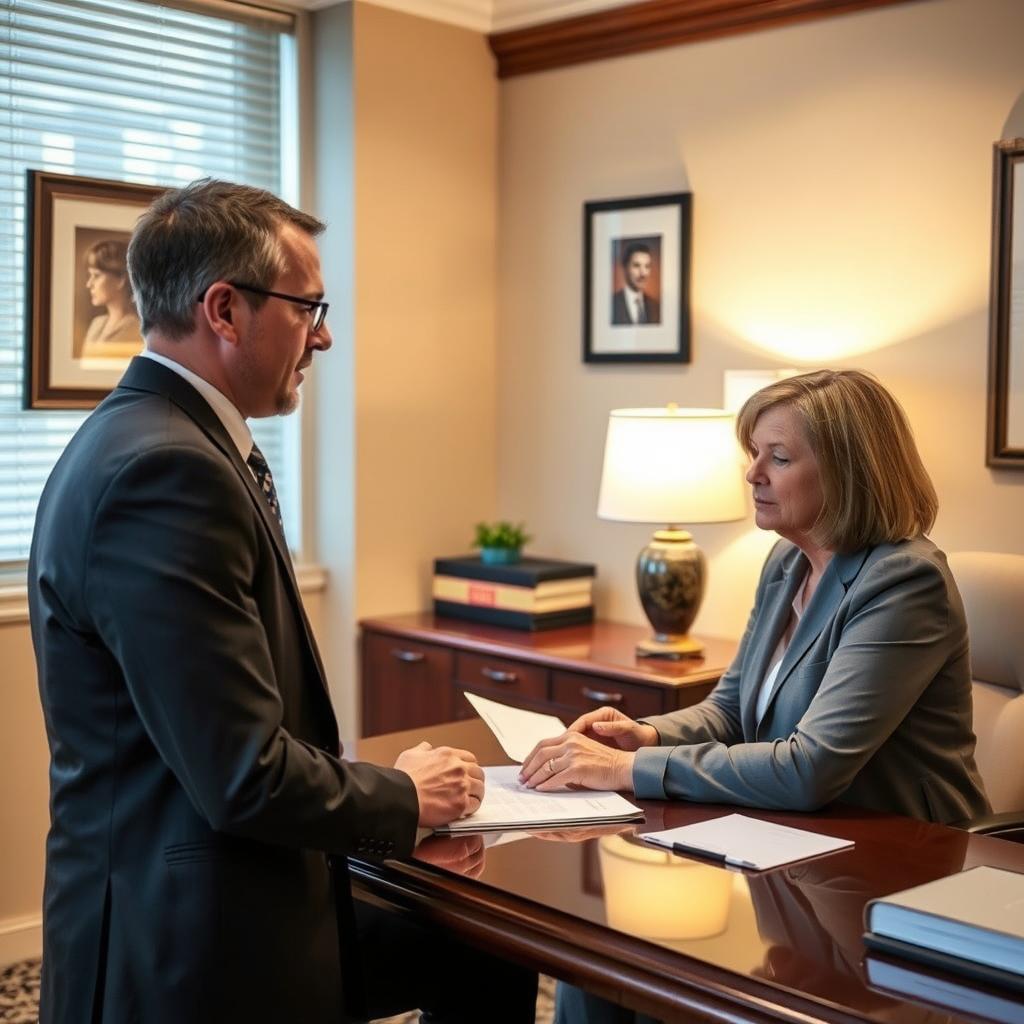
Alimony Modification Lawyer Prince George County, VA
Alimony modification in Virginia rests on a fundamental premise: a spousal support order may be altered when a material change in circumstances occurs. In Prince George County, that determination is made by the Circuit Court, which applies the statutory factors listed at Va. Code § 20‑107.1. Law Offices Of SRIS, P.C. represents clients seeking to increase, decrease, or terminate alimony in Prince George County, drawing on extensive experience with the local courts and the legal framework that governs post‑divorce support adjustments. The firm’s Richmond location handles matters at the Prince George County Circuit Court, located at 6601 Courts Drive, Prince George, Virginia. Mr. Sris and his Of Counsel team work with individuals who face changed financial conditions, remarriage, cohabitation, health issues, or other circumstances that may warrant a modification. For a consultation about your alimony modification matter, reach Law Offices Of SRIS, P.C. at (888) 437‑7747. Law Offices Of SRIS, P.C. – Advocacy Without Borders.
What Alimony Modification Means in Prince George County, Virginia
In Virginia, spousal support—often called alimony—is not permanently fixed. Either party may petition the court to modify an existing award if there has been a material change in circumstances that justifies an increase, decrease, or termination of the obligation. The governing statute is Va. Code § 20‑107.1, which directs the court to consider the same broad set of factors used at the initial determination, including the needs of the recipient, the ability of the payor to pay, the duration of the marriage, the standard of living established during the marriage, and the contributions of each party to the family.
In Prince George County, all divorce‑related matters, including alimony modification, are heard by the Prince George County Circuit Court. This court is part of the Eleventh Judicial District and sits at 6601 Courts Drive, Prince George, VA 23875. Standalone custody, visitation, and child support issues—which often intersect with alimony modification requests—are handled by the Prince George County Juvenile and Domestic Relations District Court. Because a modification proceeding can involve intertwined financial and custodial questions, local practitioners need to coordinate filings across both courts when necessary.
Virginia’s equitable distribution regime, codified at Va. Code § 20‑107.3, does not directly control post‑divorce modification, but the property division background can influence the court’s view of the parties’ financial circumstances. A party seeking modification must demonstrate that the change is significant, not merely temporary, and not reasonably anticipated at the time of the original order. Common examples include a substantial involuntary loss of employment, a permanent disability, an increase in the recipient’s income or cohabitation in a marriage‑like relationship, or the payor’s retirement. Mr. Sris and his Of Counsel evaluate these factual changes in light of the specific statutory factors and the local practices of the Prince George County Circuit Court.
How Mr. Sris and His Of Counsel Handle Alimony Modification Cases
Alimony modification proceedings begin with a thorough evaluation of whether a material change in circumstances exists under Virginia law. Mr. Sris and his Of Counsel review the original support order, the financial affidavits that were in place at the time, and the current financial situation of both parties. They identify the specific statutory factor or factors that the changed situation implicates and assess how the Prince George County Circuit Court has interpreted those factors in comparable matters. This analysis drives the strategy for either seeking or opposing a modification.
Once the factual basis is established, Mr. Sris and his Of Counsel typically work to resolve the matter through negotiation or mediation where possible. Many alimony modification disputes in Prince George County are resolved by agreement before a full hearing, which can save time and expense. If a voluntary resolution cannot be reached, the firm files a petition to modify in the Circuit Court and presents the evidence at a hearing. The court’s decision is guided by the statutory factors, but the presentation of financial documentation, expert testimony when needed, and argument about the significance of the changed circumstances all play a role in the outcome. Throughout the process, Mr. Sris and his Of Counsel work to achieve a result that reflects the current financial realities while respecting the original order’s intent.
About Mr. Sris and His Of Counsel Team
Mr. Sris, Owner and Founder of Law Offices Of SRIS, P.C., has practiced law since 1997 and is admitted in Virginia, Maryland, the District of Columbia, New Jersey, and New York. He is a former prosecutor whose experience informs his approach to family law litigation, including alimony modification matters that may involve contested evidentiary hearings. Mr. Sris testified before the Virginia House Courts of Justice Committee in support of 2019 HB 635 (chief patron Del. David Bulova), which addressed equitable distribution issues. His Of Counsel team brings extensive combined legal experience in family law, handling matters in courts throughout Virginia. Results may vary.
Law Offices Of SRIS, P.C. represents clients from its Richmond location at 7400 Beaufont Springs Drive, Suite 300, Room 395, Richmond, VA 23225. By appointment only. Call (888) 437‑7747 to schedule a consultation.
Frequently Asked Questions
What qualifies as a material change in circumstances for alimony modification in Virginia?
A material change in circumstances is a significant, unanticipated shift in the financial situation of either party that affects the need for support or the ability to pay. Virginia courts look to the factors in Va. Code § 20‑107.1, including changes in income, employment, health, or living arrangements. Cohabitation in a marriage‑like relationship, a voluntary reduction in income without justification, or a substantial increase in the recipient’s earnings can all support a modification. The change must be more than temporary and must not have been contemplated when the original order was entered. Each case is fact‑specific, and the Circuit Court in Prince George County exercises discretion in applying the statutory factors.
How do I begin an alimony modification case in Prince George County?
To seek a modification, a party must file a petition with the Prince George County Circuit Court that clearly states the changed circumstances and the relief requested. The petition should be supported by financial documentation, such as pay stubs, tax returns, medical records, or evidence of cohabitation. The court may schedule a hearing after the filing, and both sides will have the opportunity to present evidence. Because the procedural requirements are strict, and timelines are driven by the court’s calendar, working with an attorney who understands local practice is important. Mr. Sris and his Of Counsel handle the preparation of the petition, the gathering of evidence, and representation at any hearing.
Can alimony be terminated in Virginia if the recipient remarries?
Yes, remarriage of the recipient spouse automatically terminates spousal support under Virginia law, unless the parties agreed otherwise in a written separation agreement. Va. Code § 20‑109 provides that upon remarriage, the obligation to pay future support ends. However, if the support obligation was set out in a contract—such as a property settlement agreement—the agreement’s terms control, and termination may not be automatic. In Prince George County, the payor can file a motion to terminate support with the Circuit Court and present evidence of the remarriage to obtain an order recognizing the termination. For details on your specific order, reach Law Offices Of SRIS, P.C. at (888) 437‑7747.
What should I bring to an initial consultation about alimony modification?
Bring a copy of the existing spousal support order, any separation agreement, recent pay stubs, tax returns, and documentation of the changed circumstance you want the court to consider. If you are seeking a decrease because of job loss, bring termination letters and evidence of your job search. If you are opposing a modification, bring evidence that the change is not material or that the other party’s financial situation has improved. Mr. Sris and his Of Counsel will review these documents during the consultation to give you an assessment of your options. Contact Law Offices Of SRIS, P.C. at (888) 437‑7747 to schedule a consultation.
Does the Prince George County court require mediation before an alimony modification hearing?
Virginia does not mandate mediation in family law cases, but many judges in Prince George County encourage parties to attempt resolution through negotiation or mediation before a contested hearing. The Circuit Court may refer parties to mediation if it believes that approach could help narrow the issues or resolve the matter entirely. Mediation can be a cost‑effective way to address alimony modification disputes, especially when both sides are willing to work toward a practical solution. Mr. Sris and his Of Counsel represent clients in mediation and, when settlement is not achievable, prepare the case for a full evidentiary hearing before the judge.
Related Legal Services
Explore additional family law representation in nearby Virginia localities:
Fairfax County Family Law Attorney |
Fairfax City Family Law Attorney |
Falls Church Family Law Attorney |
Prince William County Family Law Attorney |
Manassas City Family Law Attorney
Virginia Legal Resources
Virginia Code § 20‑107.1 – Spousal Support Factors |
Prince George County Circuit Court |
Virginia Code Title 20 – Domestic Relations
Attorney advertising. Prior results do not guarantee a similar outcome. Case results depend on a variety of factors unique to each case. Results may vary. Attorney responsible for this advertising: Mr. Sris.