
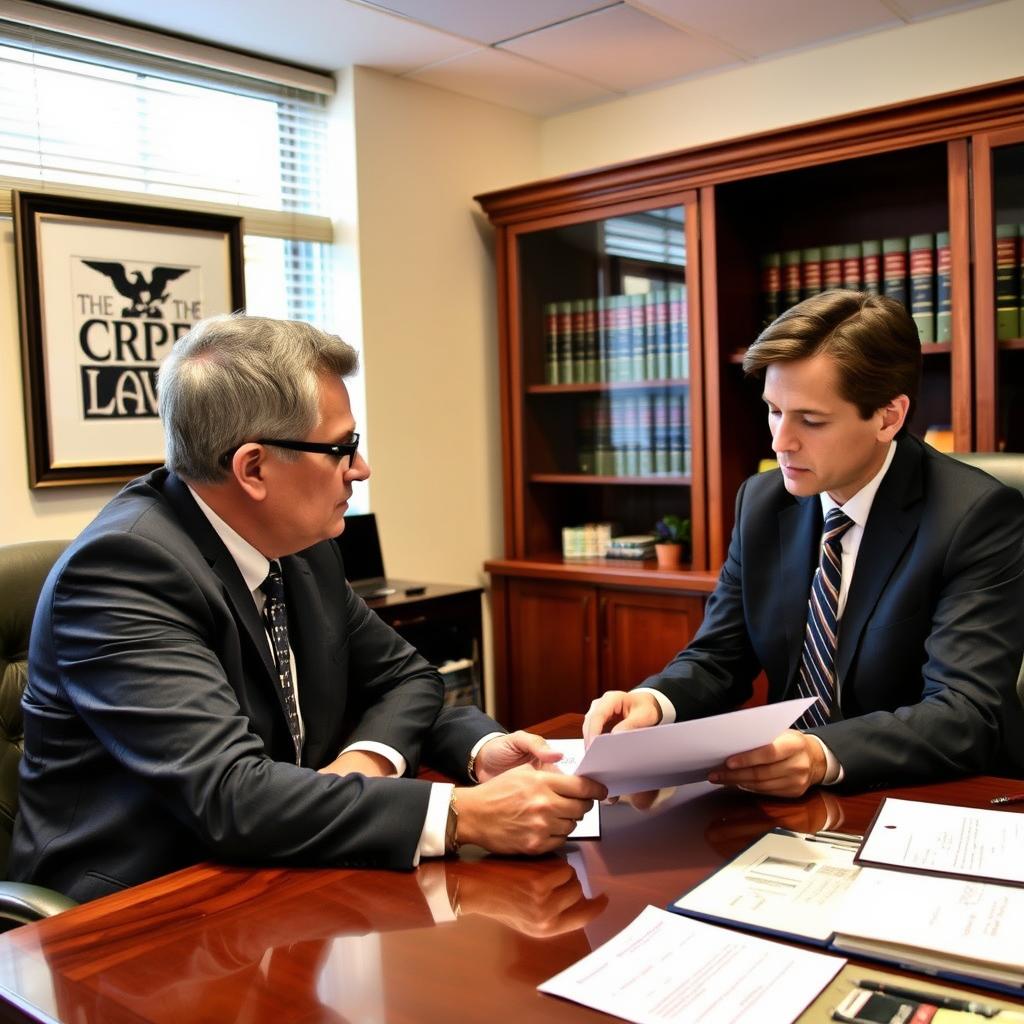
Alimony Contempt Lawyer King William County, VA
When a former spouse fails to pay court-ordered spousal support, the recipient may seek enforcement through a contempt proceeding. In King William County, Virginia, alimony contempt matters are heard in the King William County Circuit Court if the underlying support obligation arises from a divorce decree, or in the King William County Juvenile and Domestic Relations District Court when the support order was entered there. These courts are located on the 9th Judicial District bench at 351 Courthouse Lane, Suite 201, King William, VA 23086. Mr. Sris, Owner and Founder of Law Offices Of SRIS, P.C., and the firm’s Of Counsel attorneys appear in both courts on behalf of clients pursuing enforcement of alimony obligations or facing contempt allegations. The firm has represented individuals in King William County family law matters since 1997, including residents of King William, West Point, and Aylett. For a discussion of your situation, reach the firm at (888) 437-7747. Law Offices Of SRIS, P.C. – Advocacy Without Borders.
What Alimony Contempt Means in King William County, Virginia
Alimony contempt occurs when a person willfully fails to comply with a spousal support order. Under Virginia law, contempt can be civil, designed to compel compliance by requiring the obligor to pay the arrearage or face sanctions, or criminal, designed to punish past disobedience with fines or jail time. The distinction turns on the purpose of the proceeding and the relief sought. In King William County, the court must find that the failure to pay was willful—that the obligor had the ability to pay but chose not to—before holding someone in contempt. A simple inability to pay, supported by credible evidence, is a defense in a contempt action.
Virginia’s spousal support statute, Va. Code § 20‑107.1, lists 13 factors the court considers when determining an alimony award, including the duration of the marriage, the parties’ ages and health, their earning capacities, and the standard of living during the marriage.
Source: Va. Code § 20‑107.1. Va. Code § 20‑107.1
Reviewed by Mr. Sris, admitted in VA/MD/DC/NJ/NY.
The contempt remedy is also subject to the court’s general enforcement powers under Va. Code § 20‑115 and the contempt statute at Va. Code § 18.2‑456. Proceedings may be initiated by a rule to show cause filed by the supported spouse, often with the help of an attorney. The show‑cause order directs the alleged contemnor to appear and explain why they should not be held in contempt. The court may award attorney fees to the prevailing party in a contempt action, and a finding of contempt can result in incarceration until the arrearage is paid or for a definite term.
Because King William County is a rural jurisdiction with limited court sessions, the timing of contempt hearings depends on the court’s calendar. The Circuit Court handles enforcement of divorce‑decree support orders, while the Juvenile and Domestic Relations District Court addresses support orders entered in that court, including those originating from custody and paternity matters. Counsel familiar with local practice can advise on the appropriate forum and the documentation needed to support a contempt petition or to mount a defense.
How Mr. Sris and the Firm’s Of Counsel Attorneys Handle Alimony Contempt Cases
When a client seeks to enforce an alimony order, the firm’s approach begins with a careful review of the underlying decree or support order and the payment history. Mr. Sris and the firm’s Of Counsel attorneys gather bank statements, pay stubs, and correspondence to establish whether the obligor had the ability to pay and the extent of the arrearage. They then prepare a detailed show‑cause motion for the appropriate King William County court, setting out the specific payments missed and the obligor’s financial circumstances as reasonably known. The goal is to present a clear factual record that supports a finding of willful contempt.
For clients who have been served with a show‑cause order, the defense strategy focuses on whether the failure to pay was willful. The firm’s attorneys investigate potential changes in the obligor’s income, health, or employment that may have affected their ability to comply. They may also explore whether the supported spouse has waived enforcement or otherwise acted in a manner that undermines the contempt claim. When feasible, the firm pursues negotiation with the opposing side to resolve the matter through a consent order or a payment plan, avoiding a contempt hearing. If a hearing is necessary, Mr. Sris and the firm’s Of Counsel attorneys present evidence and examine witnesses, advocating for a resolution that protects the client’s interests while respecting the court’s authority.
The firm’s experience in family law matters extends to coordinating with other professionals—such as accountants or vocational attorneys—when the financial picture is complex. However, each case is handled with attention to the specific facts and the client’s objectives, not by a formula.
About Mr. Sris and the Firm’s Of Counsel Attorneys
Mr. Sris, Owner and Founder of Law Offices Of SRIS, P.C., has practiced law since 1997. He is admitted in Virginia, Maryland, the District of Columbia, New Jersey, and New York. A former prosecutor, Mr. Sris brings an understanding of courtroom dynamics and evidentiary standards that is applied in family law matters, including alimony enforcement and contempt proceedings. He testified before the Virginia House Courts of Justice Committee in support of 2019 HB 635 (chief patron Del. David Bulova), a bill addressing equitable distribution procedures.
The firm’s Of Counsel attorneys are experienced practitioners who concentrate on family law and related civil litigation. They work directly with clients in King William County, appearing at the Circuit Court and the Juvenile and Domestic Relations District Court. Together, Mr. Sris and the firm’s Of Counsel attorneys provide representation tailored to the needs of individuals in communities such as King William, West Point, and Aylett, drawing on extensive combined legal experience. Results may vary. For a consultation, call (888) 437-7747.
Frequently Asked Questions
What is alimony contempt in Virginia?
Alimony contempt is a court’s finding that a person willfully disobeyed a spousal support order. In Virginia, the obligee must prove by a preponderance of the evidence that the obligor had the ability to pay and failed to do so. A finding of contempt can lead to jail time, a fine, or an order to pay attorney fees. Contempt is a tool to enforce compliance, not simply to punish past non‑payment, though criminal contempt has punitive aspects. The proceeding is distinct from a modification action; contempt looks backward at a violation, while modification looks forward to changed circumstances.
What are the possible consequences of an alimony contempt finding in King William County?
A contempt finding can result in incarceration, a fine, a judgment for the arrearage, and an award of the other party’s attorney fees. The court may also impose conditions such as a payment schedule or bond to secure future payments. If the contemnor is jailed, they may be released upon paying a specified purge amount. The exact sanctions depend on the severity of the violation, the obligor’s ability to pay, and whether the contempt is civil or criminal. In King William County, the judge has broad discretion within the limits set by Virginia law.
How can I enforce an alimony award in King William County?
Enforcement typically begins with filing a rule to show cause in the court that issued the underlying support order. The moving party must present evidence of the order, the amount of the arrearage, and facts tending to show the obligor’s ability to pay. An attorney can prepare the necessary pleadings, gather documentation, and, if the court issues a show‑cause order, serve it on the obligor. A hearing follows in which both sides present their case. For support orders entered in a divorce decree, enforcement is pursued in the Circuit Court; standalone support orders are enforced in the Juvenile and Domestic Relations District Court.
Can I defend against an alimony contempt accusation?
Yes. Defenses include proving an inability to pay, a change in circumstances that has not yet been modified, lack of proper service, or that the obligation has been satisfied. The accused must show that the non‑payment was not willful. If the obligor’s income has decreased substantially or they have become disabled, the court may find no contempt. An attorney can help present evidence—financial records, medical documentation, employment records—and argue that the failure to pay was not a willful disregard of the order. Resolving the matter through a negotiated arrearage payment plan can sometimes avoid a contempt hearing.
Do I need a lawyer for an alimony contempt matter in King William County?
While not legally required, representation by an experienced family law attorney is strongly advisable. Contempt proceedings involve procedural rules, evidence presentation, and potential loss of liberty. An attorney can ensure that the proper court is used, that the necessary proof is submitted, and that the client’s rights are protected. At Law Offices Of SRIS, P.C., Mr. Sris and the firm’s Of Counsel attorneys are familiar with King William County court procedures and can guide you through the enforcement or defense process. For a consultation, call (888) 437-7747.
Fairfax County family law lawyer •
Fairfax City family law lawyer •
Falls Church family law lawyer •
Prince William County family law lawyer •
Manassas family law lawyer
Va. Code § 20‑107.1 – spousal support factors •
Va. Code § 18.2‑456 – contempt of court •
King William County Circuit Court
Attorney advertising. Prior results do not guarantee a similar outcome.
Results may vary.
Case results depend on a variety of factors unique to each case.