
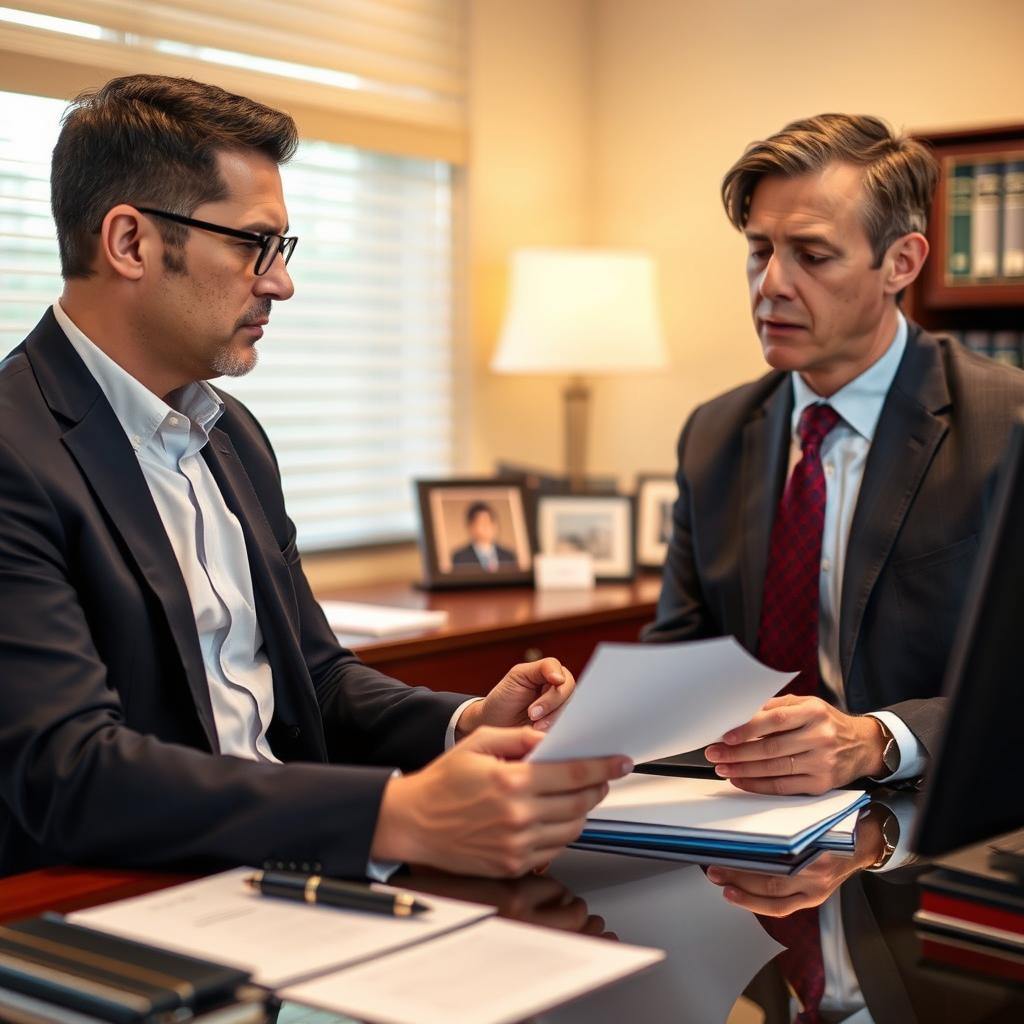
Adultery Divorce Lawyer Prince George County, VA
Adultery can fundamentally change the course of a divorce, altering property division, spousal support, and the overall timeline. In Prince George County, adultery-based divorces are filed in the Prince George County Circuit Court under Virginia Code § 20‑91(1), which permits a divorce without a waiting period when one spouse proves the other’s marital infidelity. Since 1997, Law Offices Of SRIS, P.C. has represented clients in fault and no‑fault divorces throughout Virginia, including Prince George County. Mr. Sris and his Of Counsel team bring extensive experience to these sensitive cases, handling the evidentiary demands, negotiating settlements, and, when necessary, litigating contested adultery allegations at the courthouse at 6601 Courts Drive in Prince George. To schedule a consultation about an adultery divorce, call (888) 437‑7747. Law Offices Of SRIS, P.C. — Advocacy Without Borders.
Adultery Divorce in Prince George County
Virginia recognizes adultery as one of the fault‑based grounds for divorce. Under Va. Code § 20‑91(1), a spouse may seek a divorce without the one‑year or six‑month separation period that no‑fault divorces require, provided the court finds clear and convincing evidence of adultery. The Prince George County Circuit Court has exclusive jurisdiction over the divorce itself, while the Prince George County Juvenile and Domestic Relations District Court may address custody and support issues. Law Offices Of SRIS, P.C. serves clients throughout Prince George County from its Richmond Location at 7400 Beaufont Springs Drive, Suite 300, Room 395, Richmond, VA 23225. By appointment only; call (888) 437‑7747.
Adultery as a fault ground can influence more than the divorce timetable. Virginia follows equitable distribution under Va. Code § 20‑107.3, which directs the court to divide marital property fairly but not necessarily equally. If a spouse’s adultery involved the dissipation of marital assets—for example, spending substantial sums on an extramarital relationship—the court may adjust the distribution to account for that waste. Similarly, under Va. Code § 20‑107.1, a spouse found to have committed adultery may be barred from receiving permanent spousal support, though the court considers the totality of the circumstances. The firm’s attorneys are experienced in presenting the financial and testimonial evidence that these determinations require.
How Mr. Sris and His Of Counsel Handle Adultery Divorce Cases
Every adultery divorce case begins with a careful evaluation of the evidence and the client’s objectives. Mr. Sris and his Of Counsel review documentary records, electronic communications, and potential witness testimony to assess whether the adultery can be proved by clear and convincing evidence—the standard required in Virginia. They then advise the client on the strategic path that best fits the situation, whether that involves filing a fault‑ground complaint, defending against allegations, or negotiating a comprehensive settlement that heads off costly litigation.
In contested matters, the firm prepares for trial in the Prince George County Circuit Court. That preparation includes identifying and working with investigators and, when necessary, forensic accountants who can trace asset dissipation. At the same time, Mr. Sris and his Of Counsel pursue resolution through negotiation or mediation whenever possible, seeking to resolve property, support, and custody issues without a full trial. Because every case is unique, the firm does not promise a particular outcome, but it works to achieve a resolution that protects the client’s long‑term interests. Results may vary.
About Mr. Sris and His Of Counsel Team
Mr. Sris, Owner and Founder of Law Offices Of SRIS, P.C., is a former prosecutor who has concentrated his practice on family law and related matters since founding the firm in 1997. He is admitted to practice in Virginia, Maryland, the District of Columbia, New Jersey, and New York. Mr. Sris testified before the Virginia House Courts of Justice Committee in support of 2019 HB 635 (chief patron Del. David Bulova), which revised the equitable‑distribution statute, Va. Code § 20‑107.3, to address retirement‑plan division.
Mr. Sris is joined by a team of Of Counsel attorneys who bring extensive experience across family law, criminal defense, and civil litigation. Together, Mr. Sris and his Of Counsel bring over 120 years of combined legal experience. Results may vary. The firm has documented 4,739+ case results since 1997 across all practice areas.
Frequently Asked Questions
What is an adultery divorce in Virginia?
An adultery divorce in Virginia is a fault‑based dissolution granted under Va. Code § 20‑91(1) when one spouse proves the other committed adultery, eliminating the mandatory separation period. Adultery is defined as voluntary sexual intercourse with someone other than one’s spouse. Because Virginia requires clear and convincing evidence, the court does not grant a divorce on this ground merely on an allegation; corroborating proof is necessary.
How does adultery affect property division in Prince George County?
Virginia’s equitable‑distribution statute (Va. Code § 20‑107.3) permits the court to consider a spouse’s adultery if it involved wasting marital assets, which can reduce that spouse’s share. The Prince George County Circuit Court weighs evidence of dissipated funds—such as lavish spending on a paramour—when determining what is equitable. The division is not automatic; the court looks at the full financial picture.
Can adultery impact child custody decisions?
Adultery alone does not dictate custody in Virginia; the court focuses on the child’s best interests under Va. Code § 20‑124.3 and considers any negative impact of the extramarital relationship on the child. If the adultery exposed the child to harm, neglect, or an unsuitable environment, it may weigh against that parent. Otherwise, custody is determined by a broader set of factors.
What evidence is required to prove adultery in Virginia?
Virginia requires clear and convincing evidence of adultery, such as eyewitness testimony, photographic proof, hotel or credit‑card records, or admissions by the unfaithful spouse. Circumstantial evidence may be enough if it shows both the inclination and the opportunity to commit adultery, but the proof must be more than mere suspicion.
How does the firm handle an adultery divorce case?
Our team evaluates the evidence, advises on strategic options, negotiates settlements, and litigates contested adultery divorce cases in Prince George County Circuit Court. We work with investigators and forensic experts where asset tracing is needed and pursue resolution through negotiation or mediation before taking the matter to trial.
Do I need to prove adultery if my spouse admits it?
Even when a spouse admits to adultery, Virginia courts typically require independent corroborating evidence before granting a divorce on that ground. A bare confession, without corroboration, may not meet the clear‑and‑convincing standard; additional proof, such as documents or witness statements, is often necessary.
What if I am falsely accused of adultery?
If you face false adultery accusations, an attorney can challenge the evidence, cross‑examine witnesses, and protect your rights in property division and support determinations. The firm examines the credibility of the accuser and the reliability of any purported proof, seeking to prevent an unjust outcome.
How does adultery affect spousal support?
Under Va. Code § 20‑107.1, a spouse found to have committed adultery may be barred from receiving permanent spousal support, though the court considers the overall equities. The adulterous spouse might still receive support if the denial would cause a manifest injustice, but the bar is a significant factor in negotiations and at trial.
How do I start an adultery divorce case in Prince George County?
Starting an adultery divorce involves filing a Complaint for Divorce in the Prince George County Circuit Court, serving the other spouse, and following the court’s procedural rules. The complaint must allege the adultery with sufficient factual specificity. Once filed, the case proceeds through discovery, motions, and potentially trial.
Why choose Law Offices Of SRIS, P.C. for an adultery divorce?
Law Offices Of SRIS, P.C. brings decades of family law experience, including handling adultery divorce cases throughout Virginia, and provides individual case review to each client’s situation. Mr. Sris and his Of Counsel combine courtroom experience with a practical, problem‑solving approach, working to achieve the trusted … Resolution in the Prince George County courts.
Virginia primary sources: Virginia Code Title 20 – Domestic Relations · Prince George County General District Court.
Law Offices Of SRIS, P.C. — Richmond Location: 7400 Beaufont Springs Drive, Suite 300, Room 395, Richmond, VA 23225. By appointment only. Call (888) 437‑7747 to schedule a consultation.
Attorney advertising. Prior results do not guarantee a similar outcome. Results may vary.
Case results depend on a variety of factors unique to each case.