
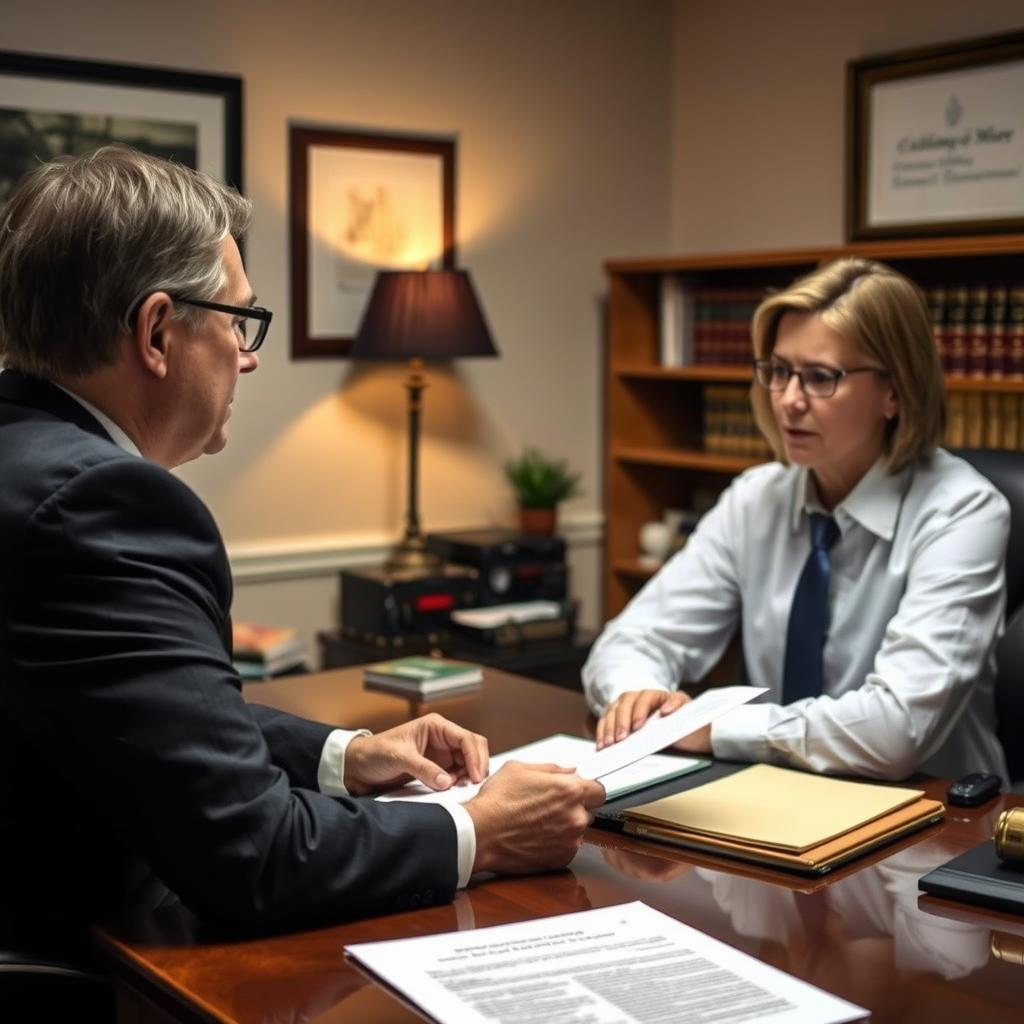
Postnuptial Agreement Lawyer Rappahannock County, VA
For couples in Rappahannock County, a postnuptial agreement can provide clarity and protection regarding property rights and financial obligations during marriage. Law Offices Of SRIS, P.C. provides experienced counsel to individuals throughout Virginia who are considering or negotiating a postnuptial agreement. Whether you live in Washington, Sperryville, Flint Hill, or elsewhere in the county, Mr. Sris and the firm’s Of Counsel attorneys can help you understand how Virginia law governs these agreements and work to craft a document that reflects your intentions. Postnuptial agreements are creatures of Virginia contract and family law, and the Rappahannock County Circuit Court at 250 Gay Street, Suite 1, Washington, VA 22747 has authority over their enforcement and interpretation in the context of divorce or legal separation. To discuss your situation with a postnuptial agreement lawyer familiar with Rappahannock County courts, reach Law Offices Of SRIS, P.C. at (888) 437-7747. Law Offices Of SRIS, P.C. – Advocacy Without Borders.
What a Postnuptial Agreement Means in Rappahannock County, Virginia
A postnuptial agreement is a contract entered into by spouses after marriage that governs property division, debt allocation, spousal support, and related financial matters in the event of divorce or death. Virginia’s Premarital Agreement Act, codified at Va. Code § 20-147 et seq., governs both prenuptial and postnuptial agreements, applying the same fundamental requirements of voluntariness, full disclosure, and conscionability. In Rappahannock County, these agreements are interpreted and enforced by the Circuit Court, which sits in the county seat of Washington and serves the communities of Sperryville, Flint Hill, and the surrounding rural areas.
Unlike a prenuptial agreement, which is executed before marriage, a postnuptial agreement is made during the marriage, often when circumstances change—such as a significant increase in assets, a business venture, an inheritance, or a decision to separate finances. Virginia is an equitable distribution state under Va. Code § 20-107.3, meaning that in the absence of a valid agreement, marital property is divided according to statutory factors rather than a fixed 50/50 rule. A properly drafted postnuptial agreement can override the default statutory scheme, allowing spouses to define their own property rights and avoid protracted litigation. Mr. Sris and the firm’s Of Counsel attorneys concentrate part of their practice on family law matters, including postnuptial agreements, and are familiar with how the Rappahannock County Circuit Court evaluates these contracts.
The court will examine whether each spouse made a fair and reasonable disclosure of assets and obligations, whether the agreement was entered into freely and without duress, and whether its terms are not unconscionable. Procedurally, any dispute over a postnuptial agreement in Rappahannock County is litigated before the Circuit Court, which has exclusive jurisdiction over divorce and equitable distribution. Agreements that address child custody or support, however, cannot bind the court’s authority to determine the best interests of the child. For families in Rappahannock County, working with an attorney who understands both the statutory framework and local court practice is important in achieving a durable agreement.
How Mr. Sris and the Firm’s Of Counsel Attorneys Approach Postnuptial Agreements
Every postnuptial agreement begins with a thorough discussion of the client’s goals, the couple’s financial picture, and the specific protections each spouse seeks. Mr. Sris and the firm’s Of Counsel attorneys gather detailed information about assets, liabilities, income sources, and future expectations. They then advise on what Virginia law permits and how a court would likely interpret the proposed terms. This collaborative process helps ensure the agreement is both practical and enforceable.
The attorneys draft or review the agreement with attention to statutory requirements and common drafting pitfalls. They address the full disclosure of assets, the clarity of property classification, spousal support provisions, and any tax or estate-planning implications. When the opposing party has their own counsel, the firm negotiates terms in a professional manner, seeking a resolution that avoids future litigation. If a dispute over an existing postnuptial agreement reaches the Rappahannock County Circuit Court, Mr. Sris and the firm’s Of Counsel attorneys can represent clients in enforcement or challenge proceedings, drawing on their experience in family law litigation. Throughout the process, the firm emphasizes compliance with Va. Code § 20-147 et seq. And awareness of how the local judiciary approaches these contracts.
About Mr. Sris and the Firm’s Of Counsel Attorneys
Mr. Sris, Owner and Founder of Law Offices Of SRIS, P.C., has practiced law since 1997 and is admitted in Virginia, Maryland, District of Columbia, New Jersey, and New York. A former prosecutor, he founded the firm with a focus on client-centered representation across multiple practice areas, including family law. Mr. Sris testified before the Virginia House Courts of Justice Committee in support of 2019 HB 635 (chief patron Del. David Bulova), a bill that revised a subsection of Virginia’s equitable distribution statute. His understanding of statutory construction and court procedure informs the firm’s approach to postnuptial agreements and other family law matters.
The firm’s Of Counsel attorneys bring experience across diverse legal backgrounds, including former prosecutorial and law enforcement service. Together, Mr. Sris and the firm’s Of Counsel attorneys provide experienced representation to individuals throughout Rappahannock County and Northern Virginia. Their collective work is grounded in a detailed knowledge of Virginia family law and the local courts. To request a consultation about a postnuptial agreement, call (888) 437-7747.
Frequently Asked Questions
What is a postnuptial agreement in Virginia?
A postnuptial agreement is a written contract between spouses, executed after marriage, that determines how property, debts, and spousal support will be handled if the marriage ends. Under Va. Code § 20-147 et seq., these agreements must be entered into voluntarily, with full financial disclosure, and must not be unconscionable. They allow couples to customize their financial arrangements without relying on Virginia’s default equitable distribution rules.
Can a postnuptial agreement be enforced in Rappahannock County?
Yes, a valid postnuptial agreement is enforceable in Rappahannock County Circuit Court. The court will review the agreement for fairness in execution and substance. If one spouse challenges the agreement, the court examines factors such as each party’s opportunity to consult counsel, the completeness of financial disclosure, and whether any undue pressure was exerted. Proper drafting by experienced counsel is key to enforceability.
What makes a postnuptial agreement valid under Virginia law?
For a postnuptial agreement to be valid in Virginia, it must be in writing, signed by both spouses, and entered into voluntarily after full and fair disclosure of each party’s financial circumstances. The agreement cannot be the product of fraud, duress, or overreaching. Additionally, its substantive terms must not be unconscionable at the time of enforcement. Courts may also consider whether each party had the opportunity to consult independent legal counsel.
Can a postnuptial agreement address spousal support?
A postnuptial agreement may include provisions waiving, limiting, or defining spousal support, but those terms are subject to court scrutiny. Virginia law allows spouses to contract regarding spousal support, but a court will not enforce a waiver if it would leave a spouse destitute or if enforcement would be inequitable. The agreement should be drafted with careful attention to the statutory factors under Va. Code § 20-107.1.
Do I need a lawyer to create a postnuptial agreement in Rappahannock County?
While Virginia law does not require a lawyer to draft or sign a postnuptial agreement, seeking experienced legal counsel is strongly advisable. A properly drafted agreement must comply with statutory requirements and anticipate future legal challenges. An attorney can ensure full disclosure, avoid ambiguous language, and advise on whether the terms meet Virginia’s fairness standards. Mr. Sris and the firm’s Of Counsel attorneys can guide Rappahannock County residents through the process.
How does a postnuptial agreement interact with equitable distribution in Virginia?
A valid postnuptial agreement supersedes Virginia’s default equitable distribution scheme. Under Va. Code § 20-107.3, marital property is distributed according to statutory factors unless spouses have contracted otherwise. A postnuptial agreement can classify specific assets as separate or marital, define division percentages, and resolve property disputes before they arise, reducing litigation in the Rappahannock County Circuit Court.
Explore related family law services: Family Law Lawyer Fairfax County · Family Law Lawyer Prince William County · Family Law Lawyer Manassas · Family Law Lawyer Fairfax City · Family Law Lawyer Falls Church
Virginia legal resources: Rappahannock County Circuit Court · Virginia Code Title 20 (Domestic Relations) · Virginia Judicial System
Attorney advertising. Prior results do not guarantee a similar outcome. Results may vary. For specific guidance on your situation, contact Law Offices Of SRIS, P.C. at (888) 437-7747. The firm’s Fairfax Location serves clients throughout Rappahannock County, including Washington, Sperryville, and Flint Hill.
Case results depend on a variety of factors unique to each case.