
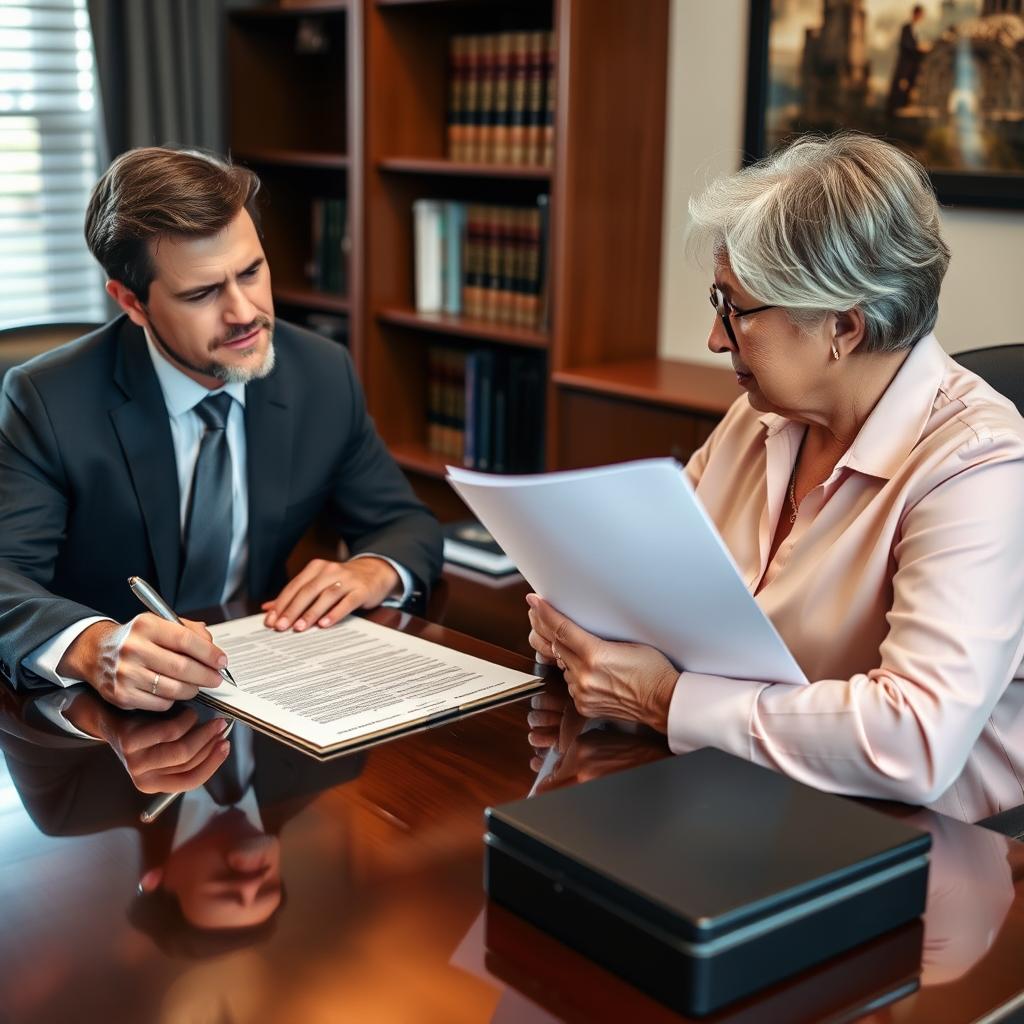
Post Divorce Modification Lawyer Louisa County, VA
When a divorce decree no longer fits the financial or parenting realities of your life, a post-divorce modification may be the path to a workable solution. In Louisa County, Virginia, the Circuit Court and the Juvenile and Domestic Relations District Court handle requests to change spousal support, child support, or custody arrangements after a final decree. Mr. Sris and his Of Counsel represent clients seeking to modify existing orders, as well as those opposing a modification they believe is unwarranted. Whether you need to adjust support because of a job loss or relocation, or a custody arrangement needs to reflect new circumstances, our firm works to present a clear, fact-based case to the court. To discuss your situation with an experienced family law attorney, call Law Offices Of SRIS, P.C. at (888) 437-7747. Law Offices Of SRIS, P.C. – Advocacy Without Borders.
Post-Divorce Modifications in Louisa County, Virginia
Virginia law permits modification of certain divorce-related orders when a material change in circumstances has occurred since the last order was entered. The court that issued the original decree retains jurisdiction to hear modification petitions. In Louisa County, divorce and equitable distribution matters are heard in the Louisa County Circuit Court, while the Juvenile and Domestic Relations District Court handles standalone custody, visitation, and support cases that may also be modified.
A modification is not a second bite at the original divorce. The party seeking the change carries the burden of showing a substantial, unforeseen, and ongoing change that affects the fairness or feasibility of the existing order. For spousal support, Virginia Code § 20-109 allows modification if a material change justifies it. Child support may be modified under § 20-108 when the payor’s income, the child’s needs, or the statutory guidelines warrant an adjustment. Custody and visitation are modifiable under § 20-124.3 based on the best interests of the child when a material change in circumstances has occurred. Our firm helps clients gather the necessary documentation and frame the modification request in light of these statutory standards.
How Mr. Sris and His Of Counsel Handle Post-Divorce Modification Cases
Mr. Sris and his Of Counsel approach each modification case by first clarifying the specific orders at issue and the change that forms the basis for the request. The firm gathers updated financial documents, employment records, parenting schedules, and any other evidence relevant to the claimed material change. Where the parties can agree on a modified arrangement, our attorneys prepare the necessary consent orders for entry by the Louisa County court. If the matter is contested, our team litigates the modification request with a focus on the statutory factors the court must consider.
Because modification proceedings often arise months or years after the underlying divorce, the court expects clear proof that circumstances have actually changed—not simply that one party is unhappy with the original arrangement. Our attorneys work to present that proof in an organized and persuasive manner, whether at a pretrial conference, a pendente lite hearing for temporary relief, or a final evidentiary hearing. Throughout the process, we advise clients on the strength of their position and the likely outcome under Virginia law, while always respecting that results depend on the specific facts of each case.
Frequently Asked Questions
What is a post-divorce modification?
A post-divorce modification is a legal proceeding to change one or more terms of a final divorce decree because circumstances have materially changed since the decree was entered. Modifications most often involve spousal support, child support, or custody and visitation. The original divorce court retains jurisdiction, and the party seeking the change must show that the existing order is no longer fair or workable. In Louisa County, such requests are filed in the circuit court that issued the decree, though support-only modifications may also be heard in the Juvenile and Domestic Relations District Court. Modification is not automatic; the court will evaluate the evidence before altering the prior order.
How does spousal support modification work in Virginia?
Under Virginia Code § 20-109, a court may modify spousal support if the party seeking the change proves a material change in circumstances that was not contemplated at the time of the original award. Common grounds include a significant involuntary reduction in income, a substantial increase in the recipient’s financial independence, cohabitation in a relationship analogous to marriage for more than one year, or retirement after reaching full retirement age. The judge will consider the same thirteen factors used in the initial spousal support determination. If the parties had a contractual agreement regarding spousal support, modification may be limited or precluded by the terms of that agreement.
When can child support be modified in Louisa County?
Child support orders may be modified when there is a material change in circumstances, such as a substantial change in either parent’s income, a change in the child’s needs, or a modification of the custody arrangement. Virginia’s child support guidelines, set out in § 20-108.1, provide the presumptive correct amount, and a modification petition typically asks the court to recalculate support under those guidelines. A parent seeking a modification must file a motion with the appropriate Louisa County court. Even an agreed-upon change in support should be formalized in a court order to be enforceable.
What is needed for a custody or visitation modification?
A parent seeking a custody or visitation modification must demonstrate both a material change in circumstances and that changing the existing arrangement would serve the child’s best interests under the ten factors listed in Virginia Code § 20-124.3. Changes might include the relocation of a parent, the remarriage of a parent, a parent’s substance abuse or instability, or a child’s expressed preference if the child is of sufficient maturity. The Louisa County Juvenile and Domestic Relations District Court handles standalone custody and visitation modifications; if the original custody order was part of a divorce decree in the circuit court, that court may also hear the modification.
Can property division be modified after a divorce?
Generally, property division in a Virginia divorce is final and not subject to modification. Under the equitable distribution statute, § 20-107.3, once the court enters a final decree dividing marital assets and debts, the property award is ordinarily permanent. Exceptions may exist if there was fraud, mistake, or a failure to disclose assets. If you believe property was concealed or misvalued at the time of the divorce, our firm can evaluate whether a separate action may be available. For the most part, however, property division is not revisited through a modification petition.
How does the Louisa County court handle modification requests?
Modification petitions follow the same procedural path as the original divorce or custody case: a motion is filed with the appropriate court, the other party is served, and a hearing is set. In Louisa County, the circuit court hears modifications related to divorce decrees that include spousal support or property issues; the Juvenile and Domestic Relations District Court hears modifications of standalone custody, visitation, or child support orders. Temporary relief, such as pendente lite support during the litigation, may be available through the circuit court. The timeline depends on court availability and the complexity of the disputed issues.
Do I need a lawyer for a post-divorce modification?
While you are not legally required to have an attorney, a modification proceeding involves the same legal standards and evidentiary rules as the original divorce case, and an experienced family law attorney can help you present the strong $1. The burden of proof is on the party requesting the change, and the court will closely examine whether the claimed material change truly exists. Mr. Sris and his Of Counsel have handled modifications in Louisa County and understand what the court expects. Retaining counsel can help avoid procedural missteps that could delay or derail your case.
What should I bring to an initial consultation about a modification?
To make the most of your consultation, bring a copy of the current divorce decree or support order, any prior modification orders, recent pay stubs or tax returns, child care expense records, and any other documents that show the change in circumstances you are relying on. Our firm can review these materials and give you a preliminary assessment of whether your situation meets the threshold for a modification under Virginia law. A written summary of the events experienced to the requested change is also helpful. Contact Law Offices Of SRIS, P.C. at (888) 437-7747 to schedule a consultation.
How long does a modification case take in Louisa County?
The time needed to resolve a modification petition varies based on the issues in dispute, the court’s calendar, and whether the parties reach an agreement. An uncontested modification may be resolved relatively quickly once the paperwork is submitted. Contested modifications requiring a full evidentiary hearing will take longer. The firm will keep you informed of scheduling developments and advocate for a resolution that addresses your immediate needs while the case is pending.
Can I modify a divorce decree from another state while living in Virginia?
Generally, a Virginia court can modify a foreign divorce decree if it has personal jurisdiction over both parties and the decree is first domesticated in Virginia. Registering a foreign divorce decree involves filing the out-of-state order with the Louisa County Circuit Court and providing notice to the other party. Once domesticated, the Virginia court can then modify custody, support, or visitation as if it had issued the original decree. Our firm can assist with the domestication process and the subsequent modification.
What if the other party refuses to comply with the existing order?
If the other party is violating a support or custody order, you may need to seek enforcement through the court rather than a modification. Enforcement proceedings can result in contempt findings, wage garnishment, or other remedies. In some cases, non-compliance may itself constitute a material change of circumstances that supports a modification. Our attorneys can help you decide whether enforcement, modification, or both are the right strategy for your situation.
About Mr. Sris and His Of Counsel Team
Mr. Sris, Owner and Founder of Law Offices Of SRIS, P.C., founded the firm in 1997 and is a former prosecutor. He is admitted to practice in Virginia, Maryland, the District of Columbia, New Jersey, and New York. Mr. Sris and his Of Counsel bring extensive combined legal experience. Results may vary. The firm’s Richmond location serves clients in Louisa County and throughout central Virginia. Our team handles post-divorce modification matters with a focus on the specific statutory standards Virginia courts apply to spousal support, child support, and custody. To speak with Mr. Sris or his Of Counsel about your modification case, call (888) 437-7747.
Internal resources for family law matters in Virginia:
- Fairfax County family law lawyer
- Fairfax City family law lawyer
- Falls Church family law lawyer
- Prince William County family law lawyer
- Manassas family law lawyer
Official Virginia family law resources:
Attorney advertising. Prior results do not guarantee a similar outcome.
Case results depend on a variety of factors unique to each case.