
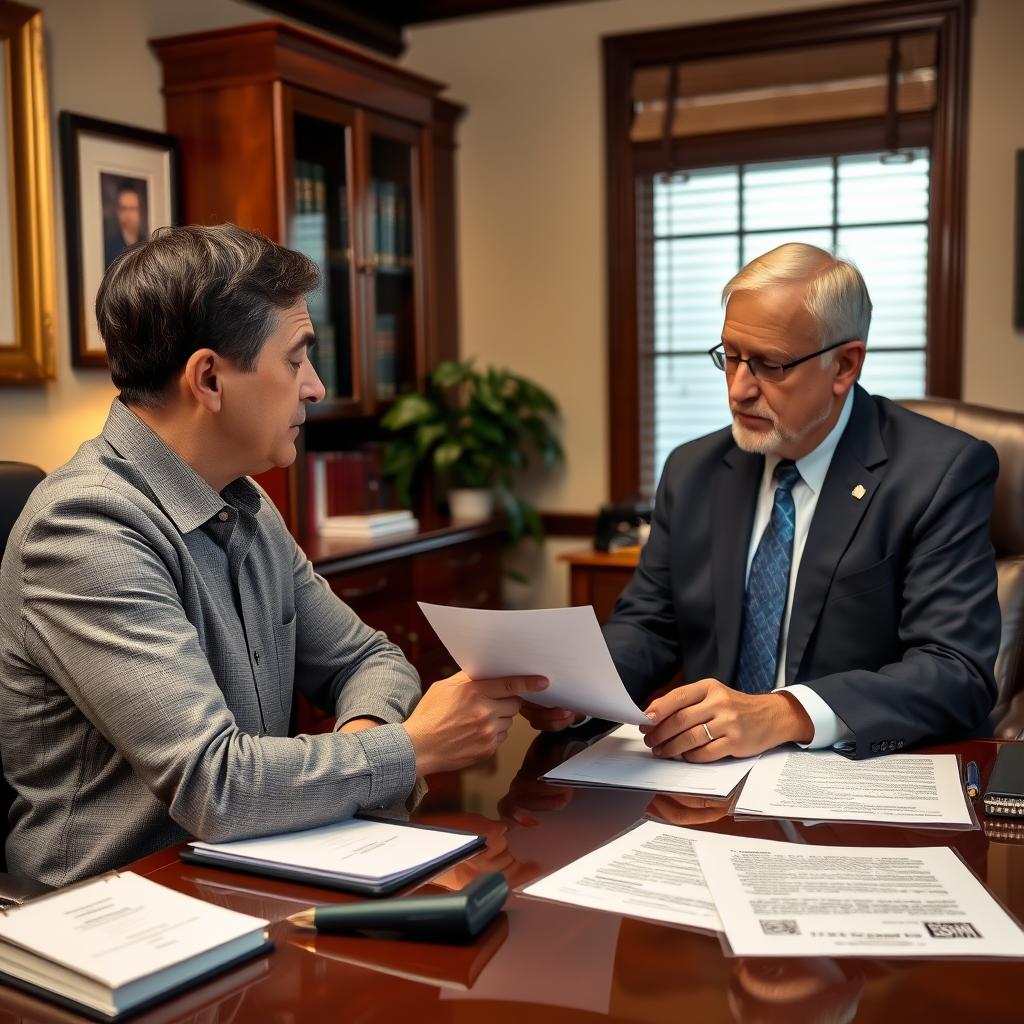
Indefinite Alimony Lawyer King William County, VA
When a Virginia marriage ends, spousal support—commonly called alimony—can be one of the most significant and contested issues. In certain circumstances, the court may order indefinite alimony, meaning support payments continue without a predetermined end date. For individuals in King William County facing questions about indefinite support, understanding how Virginia law applies and how local courts approach these cases is essential. King William County family law matters involving divorce, support, and equitable distribution are heard at the King William County Circuit Court and the King William County Juvenile & Domestic Relations District Court, located at 351 Courthouse Lane, Suite 201, King William, Virginia. Mr. Sris, Owner and Founder of Law Offices Of SRIS, P.C., and his Of Counsel team represent clients in King William County and across Virginia in indefinite alimony proceedings. Contact Law Offices Of SRIS, P.C. at (888) 437-7747 to schedule a consultation about your situation. Law Offices Of SRIS, P.C. – Advocacy Without Borders.
What Indefinite Alimony Means in King William County, VA
Indefinite alimony under Virginia law is a form of spousal support that continues for an unspecified duration—essentially, it does not automatically terminate after a set number of months or years. The statutory framework is found in Va. Code § 20-107.1, which directs the court to consider thirteen factors when determining the nature, amount, and duration of support. In King William County, the Circuit Court exercises jurisdiction over divorce and spousal support determinations, while the Juvenile & Domestic Relations District Court handles related matters involving custody, visitation, and child support. Both courts apply the same statutory analysis, but procedural nuances can differ based on whether support is litigated in the context of a contested divorce or a modification proceeding.
The decision to award indefinite alimony rather than a rehabilitative or fixed-term award turns heavily on the facts of each case. The court weighs the duration of the marriage, the standard of living established during the marriage, the parties’ respective earning capacities, ages, health conditions, and contributions to the family. Where the evidence demonstrates that a spouse is unable to become self‑supporting or that a rehabilitative period would be inadequate to achieve financial independence, the court may conclude that indefinite support is warranted. King William County sits within Virginia’s Ninth Judicial District, and its judges apply the statute with attention to the specific financial circumstances presented by the parties. Mr. Sris and his Of Counsel are familiar with how the local bench approaches the statutory factors and can provide guidance tailored to your case.
How Mr. Sris and His Of Counsel Handle Indefinite Alimony Cases
Mr. Sris and his Of Counsel take a thorough, methodical approach to indefinite alimony matters. They begin by analyzing the complete financial picture of both parties—income, assets, debts, earning potential, and financial needs—within the framework of Va. Code § 20-107.1. The team prepares detailed financial affidavits and, when necessary, works with forensic accountants and vocational evaluators to paint an accurate picture for the court. In negotiations, they seek to arrive at a support arrangement that is fair and sustainable, and when litigation is unavoidable, they present the evidence clearly and strategically at the King William County Circuit Court or Juvenile & Domestic Relations District Court.
The firm’s representation extends beyond the initial support order. Indefinite alimony may be subject to modification if a material change in circumstances occurs, such as a significant income shift or remarriage. Enforcement actions are also available when a payor fails to meet the support obligation. Mr. Sris and his Of Counsel assist clients with modifications, enforcement proceedings, and contempt actions in King William County, working to protect their clients’ interests through each stage of the process.
About Mr. Sris and His Of Counsel Team
Mr. Sris founded Law Offices Of SRIS, P.C. in 1997. A former prosecutor, he brings a trial‑tested perspective to family law disputes involving complex financial issues. He is admitted to practice in Virginia, Maryland, the District of Columbia, New Jersey, and New York. His Of Counsel team includes experienced attorneys who concentrate in family law, and together they bring extensive combined legal experience to indefinite alimony cases in King William County and across Virginia. Mr. Sris and his Of Counsel have represented clients in a range of family law matters, working toward favorable outcomes while recognizing that each case is unique. Results may vary.
Mr. Sris testified before the Virginia House Courts of Justice Committee in support of 2019 HB 635 (chief patron Del. David Bulova). The firm’s Richmond Location, at 7400 Beaufont Springs Drive, Suite 300, Room 395, Richmond, VA 23225, serves clients throughout the King William County area. Consultations are available by appointment; call (888) 437‑7747.
Frequently Asked Questions
What is indefinite alimony in Virginia?
Indefinite alimony is spousal support that continues for an open‑ended duration, without a fixed termination date. Virginia courts award indefinite alimony when the evidence shows that the recipient spouse cannot achieve self‑sufficiency or that a rehabilitative time‑limited award would be insufficient. The determination is based on the factors listed in Va. Code § 20‑107.1, including the marriage’s length, the parties’ ages and health, earning capacities, and the standard of living established during the marriage. Unlike rehabilitative alimony, indefinite support does not automatically end after a set number of months; it may continue until further court order or the occurrence of a statutory terminating event, such as remarriage or death.
When does a Virginia court award indefinite alimony instead of rehabilitative support?
A court may award indefinite alimony when a spouse proves that they cannot become self‑supporting at a standard of living comparable to the marriage or that a time‑limited award would be unfair. This often arises in long‑term marriages where one spouse has been out of the workforce for many years, has significant health limitations, or lacks the education or training to achieve financial independence. The court considers all statutory factors and may also fashion a hybrid award—rehabilitative support for a period followed by indefinite support—if the circumstances merit. In King William County, the Circuit Court makes this determination after a hearing where both sides present evidence.
Can indefinite alimony be modified or terminated?
Yes, indefinite alimony may be modified if there has been a material change in circumstances, and it may terminate upon the recipient’s remarriage or cohabitation in a relationship analogous to marriage. A material change might include a substantial increase or decrease in either party’s income, a job loss, or a change in health. The party seeking modification must prove the change is significant and not temporary. Termination can also occur if the recipient spouse remarries or if the paying spouse passes away, unless the support agreement or court order provides otherwise. Modification proceedings are filed in the King William County Circuit Court, which reviews the new circumstances against the original support order.
How do King William County courts handle indefinite alimony?
Indefinite alimony cases in King William County are heard in the Circuit Court, which follows Virginia statutory law and local procedural rules. The court will require financial disclosures, written statements of income and expenses, and often testimony from both parties. If the alimony dispute arises post‑divorce (as a modification or enforcement matter), the same court retains jurisdiction. The firm’s Richmond Location regularly appears at the King William County courthouse, and Mr. Sris and his Of Counsel are familiar with the filing requirements and judicial expectations there. Contact Law Offices Of SRIS, P.C. at (888) 437‑7747 to discuss how your case would proceed.
Do I need a lawyer for an indefinite alimony case in King William County?
While you are not legally required to have an attorney, indefinite alimony cases involve complex financial evidence and legal standards that make representation strongly advisable. An experienced family law attorney can help you gather the necessary documentation, prepare persuasive arguments under the statutory factors, negotiate a settlement when feasible, and present your case in the King William County Circuit Court if necessary. Because the outcome can affect your financial future for many years, having counsel who understands both Virginia alimony law and local court practice can be critical. To request a consultation, call Law Offices Of SRIS, P.C. at (888) 437‑7747.
What evidence is important in an indefinite alimony proceeding?
The court will examine detailed financial records, including tax returns, pay stubs, bank statements, retirement account statements, and a statement of monthly living expenses. Additionally, medical records or vocational assessments may be central to showing a spouse’s inability to become self‑supporting. The judge will weigh the history of the marriage, including each spouse’s contributions as a homemaker and career sacrifices. In King William County, thorough preparation of these materials is essential to give the court a clear picture of the parties’ circumstances. Mr. Sris and his Of Counsel can guide you through the required disclosures and help build a complete evidentiary record.
Virginia Family Law Sources:
Attorney advertising. Prior results do not guarantee a similar outcome. Results may vary.
Engaging Law Offices Of SRIS, P.C. Requires a signed engagement agreement.
Case results depend on a variety of factors unique to each case.