
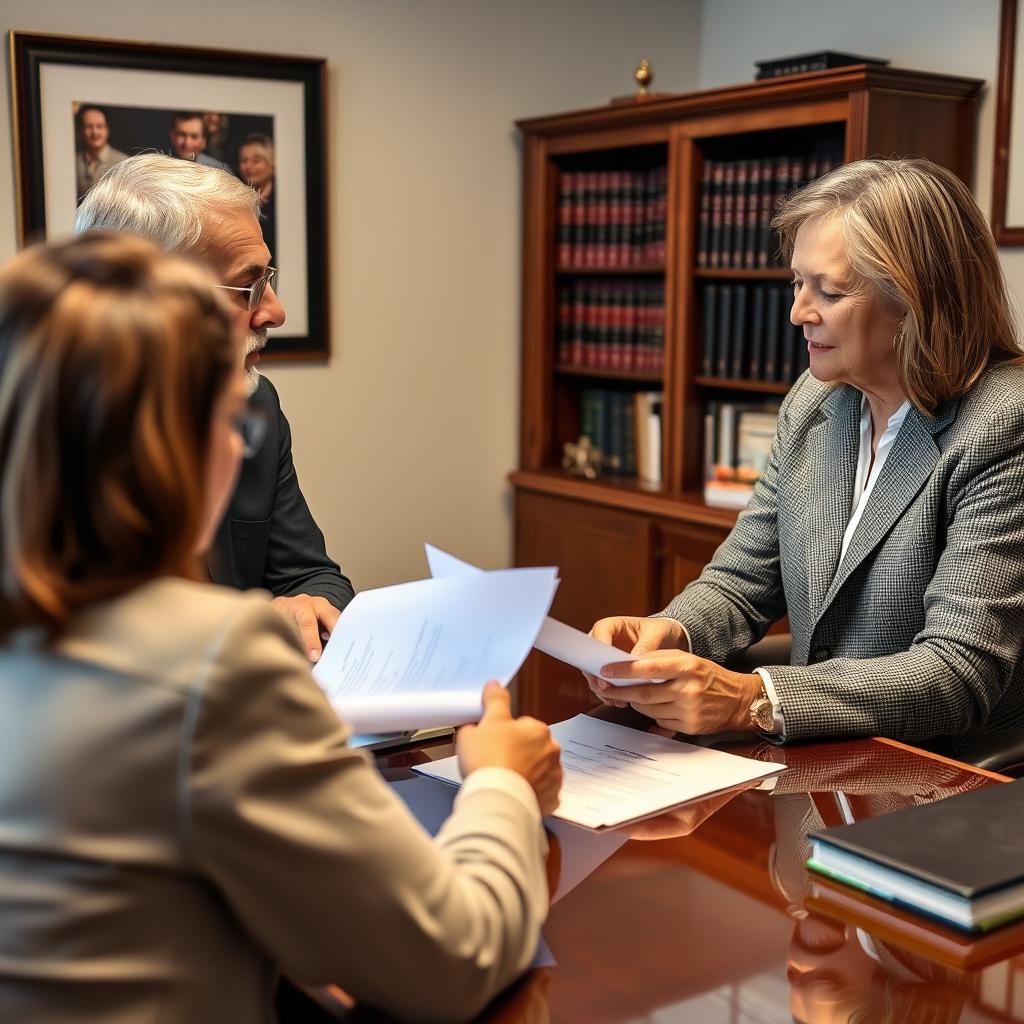
Kinship Guardianship Lawyer Roanoke County, VA
When a relative or close family friend steps forward to care for a child whose parents are unable to do so, the legal path in Virginia is often kinship guardianship. This arrangement is governed by Va. Code § 64.2-2000 et seq., which sets out the procedures for establishing a guardianship for a minor by someone who is not the child’s parent. In Roanoke County, these matters are heard in the Roanoke County Circuit Court or the Roanoke County Juvenile and Domestic Relations District Court, depending on whether the case involves concurrent custody, support, or protective issues. The attorney who handles your kinship guardianship case needs to understand how these courts operate, how to present evidence of parental unfitness or the child’s need for stability, and how to coordinate with any existing family-law proceedings. Law Offices Of SRIS, P.C. – Advocacy Without Borders.
Law Offices Of SRIS, P.C. represents clients in kinship guardianship proceedings throughout Roanoke County, including Salem, Vinton, Cave Spring, Hollins, and Catawba. Mr. Sris, Owner and Founder of Law Offices Of SRIS, P.C., leads the firm’s family law practice, which includes guardianship matters. Mr. Sris and his Of Counsel bring extensive combined legal experience to these cases. Results may vary. To discuss your situation, reach Law Offices Of SRIS, P.C. at (888) 437-7747.
What Kinship Guardianship Means in Roanoke County
In Virginia, kinship guardianship is a legal relationship between a child and a non-parent adult—typically a grandparent, aunt, uncle, or adult sibling—who is granted the authority and responsibility to care for the child. The process is governed by Va. Code § 64.2-2000 et seq., which sets out the requirements for appointment of a guardian of a minor. Unlike adoption, kinship guardianship does not sever the legal rights of the birth parents, but it does give the guardian the authority to make decisions about the child’s education, healthcare, and general welfare. The court retains oversight, and the guardian must file periodic reports.
In Roanoke County, the specific court where a kinship guardianship petition is filed depends on the circumstances. The Roanoke County Juvenile and Domestic Relations District Court generally handles standalone custody, visitation, and guardianship matters involving children. If the guardianship arises within a divorce or is combined with equitable distribution or spousal support claims, the case may proceed in Roanoke County Circuit Court at 305 East Main Street, Salem, VA 24153. The court determines whether granting a kinship guardianship is in the best interests of the child, considering factors such as the child’s relationship with the proposed guardian, the reasons parental care is unavailable, and the guardian’s ability to provide a stable home. Virginia does not require a mandatory separation period or fault grounds for kinship guardianship; the proceeding is separate from divorce statutes, though it often interacts with custody and support orders.
How Mr. Sris and His Of Counsel Handle Kinship Guardianship Cases
In a typical kinship guardianship case, Mr. Sris and his Of Counsel first evaluate the factual basis for seeking guardianship. This includes reviewing whether the biological parents are unable or unwilling to care for the child—whether due to substance abuse, incarceration, military deployment, abandonment, or other circumstances—and whether the proposed guardian is a suitable placement. The team gathers documentation, including declarations from teachers, medical providers, and other witnesses, and works with the client to prepare the petition and supporting evidence.
Once the petition is filed, the matter proceeds to a hearing. In Roanoke County, the court will likely appoint a Guardian ad Litem (GAL) to represent the child’s interests. Mr. Sris and his Of Counsel coordinate with the GAL and present evidence that supports the guardianship. If the parents contest the petition, the case becomes contested litigation, which may involve multiple hearings and possibly a trial. The firm appears in Roanoke County courts regularly and understands local procedural expectations—such as the need for a corroborating witness, the format of the proposed guardianship order, and the documentation required for the guardian’s annual report. Throughout the process, Mr. Sris and his Of Counsel work to protect the child’s welfare while respecting the legal rights of all parties.
About Mr. Sris and His Of Counsel Team
Mr. Sris, Owner and Founder of Law Offices Of SRIS, P.C., opened the firm in 1997. A former prosecutor, he has built a multi-state practice with a focus on family law matters, including guardianship, custody, and divorce. Mr. Sris is admitted to practice in Virginia, Maryland, the District of Columbia, New Jersey, and New York. In his family law work, he draws on decades of courtroom experience—both as a prosecutor and in civil litigation—to advocate for families facing complex domestic-relations challenges. Mr. Sris testified before the Virginia House Courts of Justice Committee in support of 2019 HB 635 (chief patron Del. David Bulova), demonstrating his commitment to Virginia family law reform.
Working alongside Mr. Sris are the firm’s Of Counsel attorneys—non-employee lawyers engaged through Excella, each with significant experience in their respective fields. The of-counsel team includes attorneys with backgrounds in child protective services, criminal law, and family litigation. Mr. Sris and his Of Counsel bring extensive combined legal experience. Results may vary. The firm serves clients from its Shenandoah/Woodstock location at 505 N Main St, Suite 103, Woodstock, VA 22664, with consultations by appointment. Reach the firm at (888) 437-7747 to schedule a consultation.
Frequently Asked Questions
What is the difference between kinship guardianship and adoption in Virginia?
Kinship guardianship does not terminate the biological parents’ legal rights, while adoption does. In a kinship guardianship, the court appoints a relative (or, in some cases, a close family friend) as the child’s guardian, granting authority to make decisions about the child’s care. The parents may retain certain visitation rights and can petition to end the guardianship if circumstances change. Adoption, by contrast, permanently severs the parent-child legal relationship and creates a new parent-child bond. Guardianship is often chosen when a family seeks a stable placement for a child without permanently ending the parents’ rights.
Do I need to be a blood relative to obtain kinship guardianship in Roanoke County?
Not necessarily, but the court considers the relationship between the child and the proposed guardian. While “kinship” typically implies a relative, Virginia law allows a non-relative who has a close, established relationship with the child—such as a godparent or long-term family friend—to petition for guardianship. The court will examine the nature of the bond, the child’s emotional needs, and the reasons the child cannot remain with the parents. Having a strong, pre-existing connection with the child strengthens the case for guardianship.
How does a court decide whether to grant kinship guardianship in Roanoke County?
The court bases its decision on the best interests of the child, guided by the evidence presented at a hearing. Under Va. Code § 64.2-2000 et seq., the judge considers factors such as the child’s age, the child’s wishes (if of sufficient maturity), the physical and mental health of all parties, the relationship between the child and the proposed guardian, the parents’ ability to care for the child, and any history of abuse or neglect. A Guardian ad Litem may be appointed to provide an independent recommendation. The judge then enters an order either granting or denying the petition.
What happens if the parents object to the kinship guardianship in Virginia?
If a parent objects, the guardianship case becomes contested, and a trial will be set. The petitioner must prove by a preponderance of the evidence that the guardianship is in the child’s best interests. The objecting parent has the right to present evidence and cross-examine witnesses. Contested guardianship cases can be lengthy and emotionally difficult. The firm prepares for the possibility of contested proceedings from the outset, gathering robust evidence and, if necessary, working with expert witnesses. To discuss your specific situation, contact Law Offices Of SRIS, P.C. at (888) 437-7747.
Can a kinship guardian make medical and educational decisions for the child?
Yes, a court-appointed kinship guardian generally has the authority to make major decisions about the child’s welfare, including medical care, schooling, and religious upbringing. The order of appointment will specify the guardian’s powers. Most kinship guardianship orders grant the guardian the ability to consent to routine medical treatment, enroll the child in school, and make decisions about extracurricular activities. For significant medical procedures, the guardian may need to seek additional court approval. The firm helps ensure that the order is drafted to give the guardian the necessary authority to care for the child day-to-day.
Related Pages:
Fairfax County Family Law |
Fairfax City Family Law |
Falls Church Family Law |
Prince William County Family Law |
Manassas Family Law
Official Virginia Primary Sources:
Va. Code § 64.2-2000 et seq. (Virginia Guardianship Statute) |
Virginia Judicial System |
Roanoke County Circuit Court
Attorney advertising. Prior results do not guarantee a similar outcome. Results may vary.
Case results depend on a variety of factors unique to each case.