
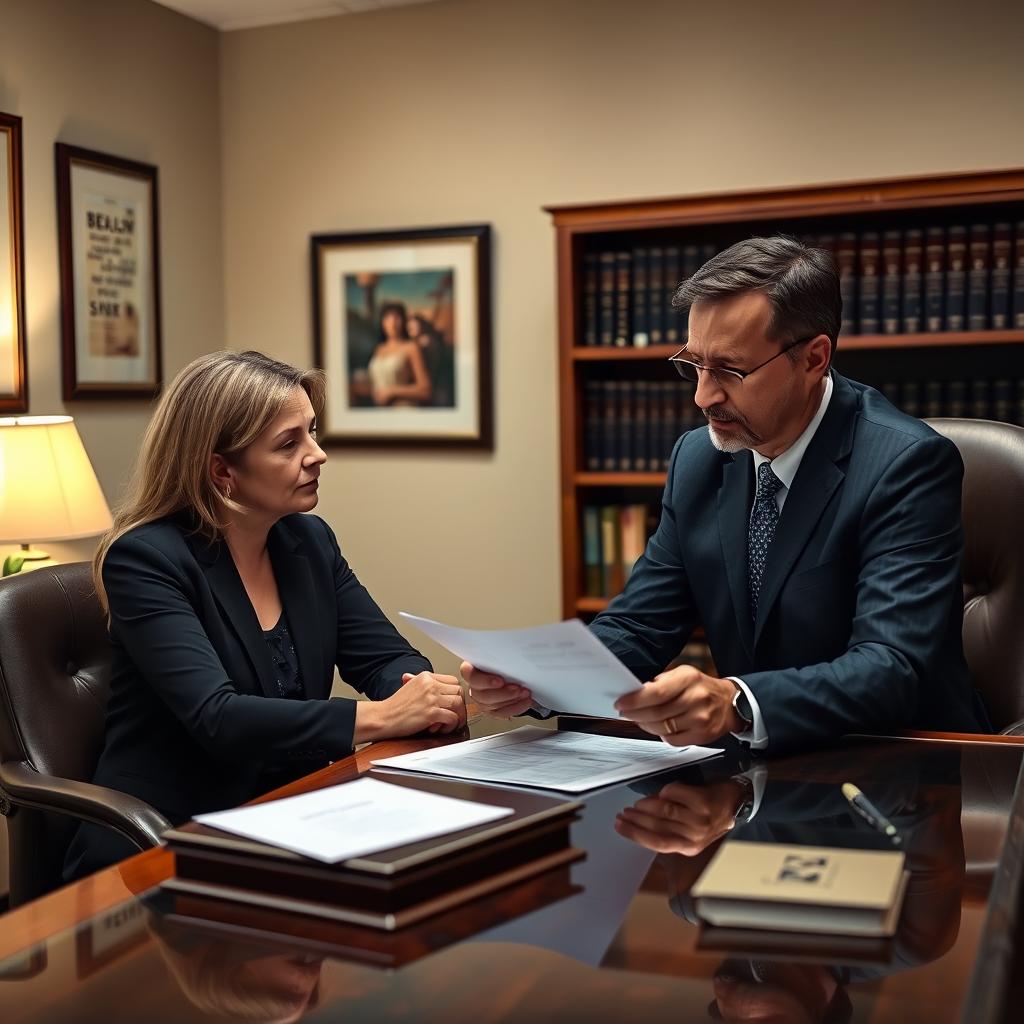
Beach Military Divorce Lawyer Dinwiddie County, VA
You are a service member stationed at Fort Gregg-Adams, just minutes from Dinwiddie County, and your marriage is ending. The stress of active duty — deployments, relocations, and the demands of military life — has taken a toll, and you need a divorce that protects your career, your pension, and your relationship with your children. A Beach Military Divorce involves unique federal and state issues: the Servicemembers Civil Relief Act may stay proceedings if you are deployed, the Uniformed Services Former Spouses’ Protection Act governs the division of military retired pay, and Virginia’s equitable distribution laws require careful classification of marital and separate property. At Law Offices Of SRIS, P.C., Mr. Sris and his Of Counsel team concentrate their practice on military divorce cases in Dinwiddie County. Founded in 1997, our firm has the experience to handle the intersection of federal military law and Virginia family law. We appear regularly in the Dinwiddie County Circuit Court and the Dinwiddie County Juvenile & Domestic Relations District Court, representing service members and their spouses through every phase, from filing the complaint to the final decree. Request a consultation at (888) 437-7747. Law Offices Of SRIS, P.C. — Advocacy Without Borders.
What Beach Military Divorce Means in Dinwiddie County
The term “Beach Military Divorce” refers to the substantial military presence in the Hampton Roads region, including Virginia Beach, Norfolk, and the surrounding installations, which shapes the legal landscape for hundreds of families each year. Although Dinwiddie County sits inland, it is within commuting distance of Fort Gregg-Adams, the Defense Supply Center Richmond, and other military assets that draw active‑duty personnel and reservists to the area. A military divorce filed in Dinwiddie County will proceed under Virginia law, specifically Title 20 of the Virginia Code, while also triggering federal statutes that protect service members and define how military benefits are treated.
Virginia is an equitable distribution state under Va. Code § 20‑107.3, meaning the court divides marital property fairly but not necessarily equally. Military retired pay is classified as marital property subject to division if the marriage overlapped the service member’s creditable service. The court may order direct payment of a share of the pension through a military qualifying court order. Virginia’s grounds for divorce include both no‑fault separation — six months with a signed separation agreement and no minor children, or one year otherwise — and fault grounds such as adultery, which carries no waiting period but requires proof. When a service member is on active duty, the SCRA allows the court to stay proceedings for a period of time to permit participation. Residency for divorce in Virginia requires that one of the parties has been domiciled in the state for at least six months before filing (Va. Code § 20‑97). Our Richmond location at 7400 Beaufont Springs Drive, Suite 300, Room 395, Richmond, VA 23225 serves the Dinwiddie County community; reach us at (888) 437‑7747.
How Mr. Sris and His Of Counsel Handle Beach Military Divorce Cases
Mr. Sris and his Of Counsel approach every military divorce with an understanding of the operational reality of military life. We evaluate whether a stay under the SCRA is advisable, coordinate discovery with deployed personnel, and build parenting plans that account for deployment cycles, temporary duty assignments, and post‑separation relocations. The equitable distribution phase includes tracing the service member’s income during the marriage, identifying the marital fraction of the pension, and valuing any Thrift Savings Plan accounts or Survivor Benefit Plan elections.
When children are involved, custody and visitation in Virginia are determined by the ten best‑interest factors listed in Va. Code § 20‑124.3. The Dinwiddie County Juvenile & Domestic Relations District Court handles standalone custody matters, while the Circuit Court resolves custody within the divorce proceeding. We help parents craft workable schedules that accommodate the service member’s unpredictable hours, even if that means incorporating virtual visitation and third‑party transport arrangements. Throughout the process, Mr. Sris and his Of Counsel work toward a result that protects your financial future and preserves your relationship with your children.
About Mr. Sris and His Of Counsel Team
Mr. Sris is the Owner and Founder of Law Offices Of SRIS, P.C. Mr. Sris was a former prosecutor before founding the firm in 1997, and today he concentrates his practice on family law matters including military divorce. Mr. Sris testified before the Virginia House Courts of Justice Committee in support of 2019 HB 635 (chief patron Del. David Bulova), a measure that revised Virginia’s equitable distribution statute. He is admitted in Virginia, Maryland, the District of Columbia, New Jersey, and New York.
Mr. Sris is joined by a team of Of Counsel with extensive litigation backgrounds. Together, they bring over 120 years of combined legal experience and have achieved 4,739+ documented firm-wide results. Results may vary.
Frequently Asked Questions
How does military divorce differ from civilian divorce in Virginia?
Military divorce involves federal laws that add extra rules to Virginia’s divorce process, particularly the Servicemembers Civil Relief Act and the Uniformed Services Former Spouses’ Protection Act. Under the SCRA, active‑duty personnel can request a stay of proceedings if their military duties prevent them from participating. The USFSPA allows state courts to divide military retired pay as marital property, provided the marriage lasted ten years overlapping ten years of creditable service. Virginia’s equitable distribution rules still apply, but a military qualifying court order is necessary to direct payment from the Defense Finance and Accounting Service. Child custody orders must also account for deployments and TDY assignments.
How is a military pension divided in a Virginia divorce?
Virginia law treats the marital share of a military pension as divisible property under Va. Code § 20‑107.3, with the court considering 11 factors to determine a fair distribution. If the parties agree, the non‑member spouse may receive a share directly from DFAS through a military qualifying court order. The marital fraction is typically the member’s years of creditable service during the marriage divided by total years of service at retirement. The Survivor Benefit Plan is often addressed as part of the settlement to protect the former spouse’s future benefits. For guidance on your specific situation, reach Law Offices Of SRIS, P.C. at (888) 437‑7747.
How does deployment affect child custody in Virginia?
Virginia courts will not consider a parent’s deployment as the sole factor in modifying custody, but they will craft temporary custody orders that protect the service member’s relationship with the child. Under Va. Code § 20‑124.3., the court’s primary concern is the best interests of the child. Deployment‑related absence is not a permanent change in circumstances. Instead, the court may issue temporary orders granting visitation rights to a family member and require virtual contact. When the deployment ends, the pre‑existing custody arrangement typically resumes. Our attorneys help create parenting plans that anticipate future deployments.
How long does a divorce take in Dinwiddie County, Virginia?
The timeline for a divorce in Dinwiddie County depends on whether it is uncontested or contested and whether mandatory separation periods apply. An uncontested divorce with a signed separation agreement can be finalized approximately 2‑4 months after filing at the Dinwiddie County Circuit Court. A contested divorce, with disputes over custody, support, or property, routinely takes 9‑18 months. Complex equitable distribution involving business valuation or retirement assets may extend to 12‑24 months. Pendente lite hearings for temporary support and custody are typically set within 21‑60 days of motion. These timeframes vary by case; Results may vary.
What are the grounds for divorce in Virginia?
Virginia recognizes both no‑fault and fault grounds for divorce under Va. Code § 20‑91. The no‑fault option requires a separation of one year, or six months if there are no minor children and the parties have entered into a written separation agreement. Fault grounds include adultery (no waiting period), cruelty causing reasonable apprehension of bodily harm, willful desertion for one year, and conviction of a felony resulting in confinement for more than one year. All divorces are filed in the Circuit Court; the Dinwiddie County Circuit Court handles divorce, equitable distribution, and spousal support. Contact our firm at (888) 437‑7747 to discuss which ground best fits your situation.
How much does a divorce cost in Dinwiddie County, Virginia?
The total cost of a divorce in Dinwiddie County depends on court filing fees, attorney fees, and case complexity, but the Circuit Court filing fee for a divorce complaint is approximately $86. Additional expenses may include service of process (approximately $12 for sheriff service or $50‑$100 for a private process server), Guardian ad Litem fees for custody disputes (typically $500‑$2,500+), and mediation costs ($100‑$300 per hour per party). Attorney fees vary widely based on the level of conflict. For a fee estimate tailored to your case, contact Law Offices Of SRIS, P.C. at (888) 437‑7747.
Related family law pages:
Fairfax County Family Law Lawyer ·
Prince William County Family Law Lawyer ·
Manassas Family Law Lawyer
Primary legal resources:
Virginia Code Title 20 — Domestic Relations ·
Dinwiddie County Circuit Court ·
Virginia State Bar
Attorney advertising. Prior results do not guarantee a similar outcome.
Case results depend on a variety of factors unique to each case. Results may vary.